
Property Advice
Advice on buying, renting and selling property in Kenya, plus neighbourhood guides, decor ideas and market news.



Subscribe to our newsletter
Expert property news, straight to your inbox.
Browse by category or keyword
All articles
587 articles · page 8 of 49

How Sameer Africa Evolved from a KSh 4 Billion Tyre Empire to an Industrial Landlord
Sameer Africa PLC has undertaken a significant pivot over the last decade, shifting from tyre manufacturing and distribution to becoming a key player in the industrial real estate sector. In 2012, before a major accounting reclassification, Sameer Africa was widely recognised for its Yana tyre brand, a market leader contributing significantly to the company’s total revenue of KShs 4.08 billion. Manufactured goods, predominantly tyres, accounted for 86.8% (KSh 3.54 billion), complemented by imported tyres, which contributed another 10.5% (KShs 429.2 million) while rental income represented just 3.0% (KSh 122.7 million). Market dynamics shifted sharply as cheaper tyre imports intensified competition and rising operational costs began to erode profit margins. By 2014, manufactured goods revenue had declined to KShs 3.08 billion, reflecting a 13.0% drop from 2012, and t

Aleph Hospitality, Hilton to Open Kenya’s First Tapestry Collection Hotel
Aleph Hospitality has signed a management deal with AVA Hotel Limited to operate Kenya’s first Tapestry Collection by Hilton property, marking a major milestone in the global hotel chain’s expansion into the local lifestyle segment. The new hotel, to be known as AVA Hotel Nairobi, Tapestry Collection by Hilton , will be located in the upmarket Lavington area, minutes from the city centre. The 91-room facility will feature multiple restaurants and lounges, a rooftop area, swimming pool, fitness centre, meeting rooms, and a business hub, catering to both business and leisure travellers. The agreement strengthens Aleph Hospitality’s position as one of the fastest-growing independent hotel management companies in the Middle East and Africa, and signals its deepening investment in East Africa’s tourism and hospitality sector.

What Kenya Can Learn from South Africa’s Real Estate Playbook
Kenya’s real estate market has been and still is on an upward trajectory. If you visited the country ten years ago, you’d be amazed at how much has changed. Places that were once open fields are now dotted with high-rises, apartment blocks, and gated estates. But even with this remarkable progress, Kenya still lags behind a more mature market like South Africa. In many ways, we’re where South Africa was about 10 or 15 years ago, full of promise, energy, and growth, but still tightening the bolts on structure and systems. And that’s not a bad thing. In fact, it’s a strategic advantage. Because if we pay attention, we can learn from the paths others have already walked; borrow what worked, avoid what didn’t, and build a real estate industry that’s truly our own. South Africa’s property market runs on structure, data, and decades of experience. Up h

Land Banking or Land Hoarding? The Hidden Game Behind Empty Plots
Land has always been one of the most trusted forms of investment in Kenya. According to the Kenya Bankers Association House Price Index, land prices in Nairobi and its outskirts have outpaced income growth for years, making it harder for ordinary Kenyans to buy homes. Land speculation isn’t evil by itself but when it turns into hoarding , it stops being investment and starts being inertia. If you’re Kenyan, you’ve definitely heard about buying land for speculation purposes. And if you haven’t already been sold that idea, trust that you’ll hear it soon, from a salesman, a relative, or even a friend. As an investment strategy, people buy plots of land, hold them for a few years, and wait for the value to rise before selling for a profit. For some investors, this has worked perfectly; case in

Integrate Home Security Early, Developers Told
Real estate developers, architects, and homeowners in Kenya are being urged to factor in home security at the design stage. With security remaining a top concern for homebuyers and tenants alike, integrating these systems early in the design phase is increasingly being viewed as a key selling point. Homeowners don’t have to choose between style and security — both can exist in harmony through thoughtful planning and smart technology. Real estate developers, architects, and homeowners in Kenya are being urged to factor in home security at the design stage rather than treating it as an add-on after construction. The call was made during an art and home security exhibition themed “The Future of Home Security Solutions”, hosted in partnership with Elements Luxury Living. The event showcased how safety,

What Responsible Real Estate Looks Like in a Digital Age
Technology is moving fast but responsible real estate is not only about being digital, it is about doing things the right way. Technology may streamline the process, but trust is built human-to-human. In a digital world where everything moves fast, doing the right thing isn’t optional. Digital progress is powerfu l, but responsibility gives it meaning. The real estate world is changing quickly. Today, many Kenyans search for property online, take virtual tours, and even sign documents digitally. Builders use software to plan and monitor projects. Buyers expect quick responses and transparent information. Technology is moving fast but responsible real estate is not only about being digital, it is about doing things the right way while using these tools. Let’s get into the h

Saving for a Home in Kenya on a Modest Income: Real Talk
Owning a home isn’t just for the wealthy , it’s for anyone with a steady income and a disciplined savings plan. Discipline is the key to achieving any goal, and saving for a home is no exception. Once you’ve identified the type of house and location, break down the total amount into achievable steps. There’s a common perception that to save for a house, you must either be earning a high income or have several streams of revenue. This belief has left many people feeling helpless about the idea of home ownership. The truth is, owning a home isn’t just for the wealthy , it’s for anyone with a steady income and a disciplined savings plan. With focus and consistency, it’s entirely within reach. Today, let’s talk about how to save for a home in Kenya, even on a modest i
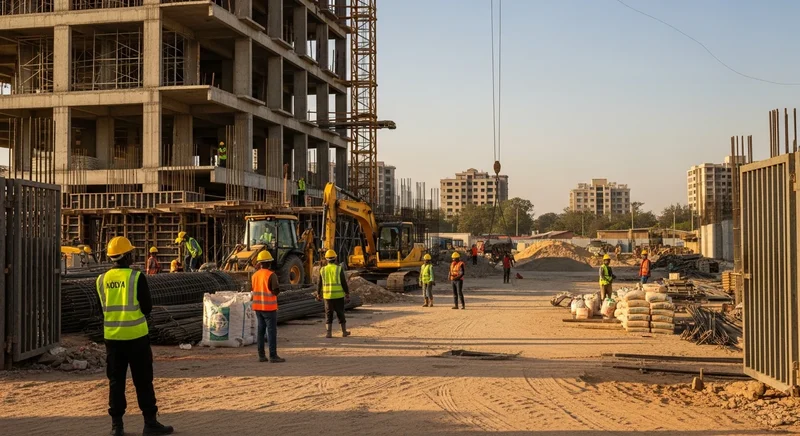
Wage Pressures Add Heat to Construction Costs as Steel, Sand Prices Surge
Construction workers are earning slightly more, but their gains are being outpaced by the rising cost of materials and fuel, new data by the Kenya National Bureau of Statistics (KNBS) shows. The Construction Input Price Index (CIPI), which tracks changes in the cost of materials, labour, equipment and transport , rose to 121.27 points in the third quarter of 2025, up from 119.75 in the previous quarter. This represents a 1.27 per cent quarterly increase and a 0.74 per cent rise year-on-year. The labour index increased to 112.45 from 111.94, reflecting higher pay for casual labourers (+1.07%) and watchmen (+3.90%). Wages for plumbers and electricians (-1.49%) and machine operators (-0.68%), however, edged lower. “The quarterly rise reflects continued volatility in input prices, particularly for petroleum-linked and imported materials,” KNBS Director-General Macdonald Obudho sai

Lang’ata Living: Where Balance Meets Bustle
Located on the southwestern edge of Nairobi lies Lang’ata, a vibrant suburb home to more than 176,000 residents. Covering roughly 76 square kilometers within the larger Lang’ata Constituency, it’s known for its balance between city life and green, open spaces. To live in Lang’ata is to enjoy a lively social scene, quick access to schools, hospitals, and shopping centres, and to grow used to the steady hum of aircraft slicing through its skyline. READ ALSO : Langata Neighbourhood Guide Table of Contents A Neighbourhood with Character Everyday Convenience The Allure and the Noise Thinking of Moving to Lang’ata? Here’s the Real Picture

BBS Mall Developer Announces KSh 65 Billion Mega Project in Tatu City
Mr. Abdiweli Hassan (OGW, EBS), the developer behind Business Bay Square (BBS Mall), has unveiled plans for a KSh 65 billion mixed-use development in Tatu City Special Economic Zone (SEZ) – a move that cements Tatu City’s reputation as one of Kenya’s fastest-growing investment hubs. READ ALSO : Analyzing BBS Mall’s Impact on Eastleigh’s Property Market Table of Contents The Mega Development Plan Who Is Behind It? Why Tatu City? A New Phase of Growth Opportunity for Investors A Vision for the Future <

Where Nairobi’s Middle Class is Moving: The Suburbs Shaping Modern Homeownership
If you’ve been paying attention to Nairobi’s property trends lately, you’ve probably noticed something interesting, the dream home isn’t necessarily behind a gate in Karen anymore. It’s just as likely to be an apartment in Kilimani, a townhouse in Lavington, or a growing family’s starter home in Ruaka or Kikuyu. That shift says a lot about who’s actually buying, and what modern homeownership looks like for Nairobi’s middle and upper-middle class. Table of Contents Kilimani Lavington & Kileleshwa Ruaka Kikuyu The Big Picture Conclusion Kilimani
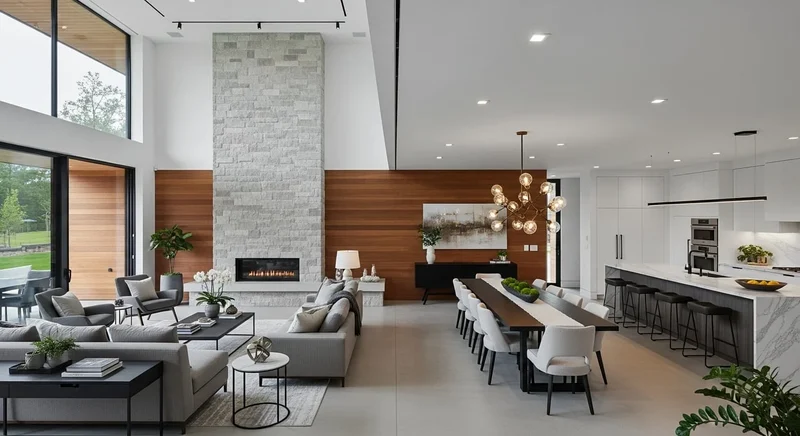
Top Interior Design Trends in Kenya for 2025
Over the years, we’ve watched our homes evolve right alongside these trends. Today, when you walk into a well-designed home, the walls are often the star of the show; from fluted panels and 3D wallpaper to floating shelves that blend function with beauty. At the end of the day, design isn’t just about how things look. It’s about how they make you feel when you walk through the door, that quiet sense of warmth, belonging, and comfort that says, you’re home. If you’ve been paying attention, you’ve probably noticed that every year brings along a new wave of interior design trends. Some are fleeting, while others stick around long enough to become timeless staples, often blending into newer styles in ways that make the end result even better than before. Over the years, we’ve watched our h