
Real Estate News
The latest real estate news for the Kenyan market.

A Fresh New Experience for Your Next Move: The New BuyRentKenya Is Here

Can Landlords Ask for Proof of Income Before Renting You a House? What Kenyan Tenants Need to Know

Stability or Stagnation? What the CBK’s 8.75% Rate Hold Means for Kenyan Homebuyers
Subscribe to our newsletter
Expert property news, straight to your inbox.
Browse by category or keyword
All Real Estate News articles
139 articles in Real Estate News · page 1 of 12

Boma Yangu Clarifies When Monthly Housing Payments Begin
The State Department for Housing and Urban Development has clarified that monthly payments begin after a unit has been allocated and the homeowner takes occupation. Applicants who are still waiting for their units to be allocated can continue saving towards their homes if they are financially able to do so. For social housing units, the deposit is 5% of the unit's value, while affordable housing units require a 10% deposit. Kenyans who have received offer letters for homes under the Boma Yangu affordable housing programme do not need to immediately start making their monthly housing payments if they are still waiting for allocation and occupation. The State Department for Housing and Urban Development has clarified that monthly p
A Fresh New Experience for Your Next Move: The New BuyRentKenya Is Here
Remember that one time you were looking for a property and almost gave up? You searched online, clicked through listing after listing, but couldn’t quite find something that matched what you actually needed. Maybe the location was wrong. Maybe the price didn’t work. Maybe the property looked great, just not for you. And after a while, you thought, I’ll come back to this later. We get it. Finding property can be a lot. That’s why we’ve been working on something better. The newly revamped BuyRentKenya is here We’ve refreshed BuyRentKenya to give you a simpler, smoother and more rewarding property search experience. Not just a fresh coat of paint. A better way to search, browse and discover properties across Kenya, with tools designed to help you find what’s more relevant to you. Sear
Can Landlords Ask for Proof of Income Before Renting You a House? What Kenyan Tenants Need to Know
Recent reports have highlighted that some Kenyan landlords and property managers are asking prospective tenants for information. In markets such as the UK, tenant referencing has been part of renting for years. A payslip might make it easy to verify one person’s income. It doesn’t necessarily tell you much about someone running a business or earning from several clients. Finding a house may no longer be only about whether you can afford the rent. Increasingly, it could also be about being able to prove that you can. For as long as many of us can remember, finding a rental home has followed a fairly simple process. You have a budget. You search for a property. You find one you like, go for an inspection, agree on the terms and, once everything is settled, s
Stability or Stagnation? What the CBK’s 8.75% Rate Hold Means for Kenyan Homebuyers
On August 11, 2026, the Central Bank of Kenya (CBK) announced that it would keep the Central Bank Rate (CBR) at 8.75%. The Central Bank Rate, or CBR, is the interest rate set by the Central Bank of Kenya to guide the cost of borrowing in the economy. Inflation rose slightly to 6.5% in July from 6.4% in June, but remained within the CBK’s target range of 2.5% to 7.5%. A stable CBR gives potential buyers something valuable: a little more certainty. If you have been thinking about buying a home, taking out a mortgage or even refinancing an existing loan, you may have come across some financial news recently: the Central Bank of Kenya (CBK) has kept its Central Bank Rate at 8.75%. But what does that actually mean?
The Dual Impact of the Housing Levy in Kenya
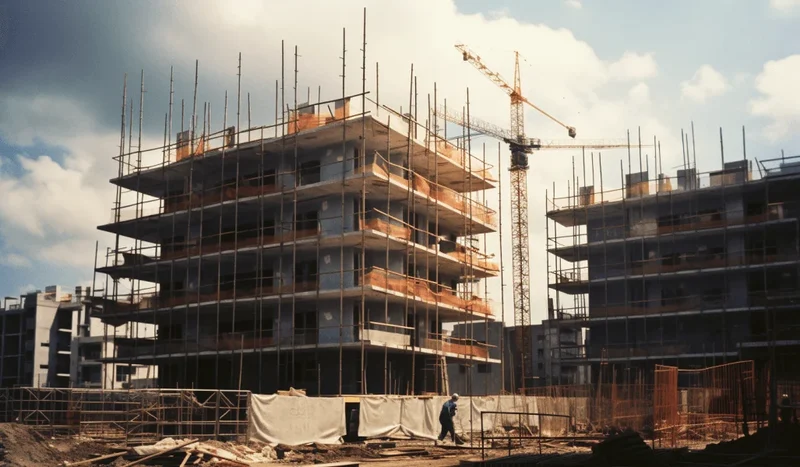
The topic on the Housing Levy has remained a hot one since the beginning of last year, dominating conversations across Kenya. As part of one of his agenda, H.E., President William Ruto announced his proposal of the housing levy where every employed Kenyan would be mandated to contribute 1.5% of their monthly salary . READ ALSO : Understanding the National Housing Development Fund Kenya However, amid the country’s soaring cost of living, the levy met strong resistance due to its potential impact—further reducing incomes already burdened by escalated taxes and high living expenses. He clarified that beyond addressing affordable housing, his vision aimed to generate employment opportunities
Rwanda Is Rethinking How Homes Are Built. Could Kenya Learn From It?
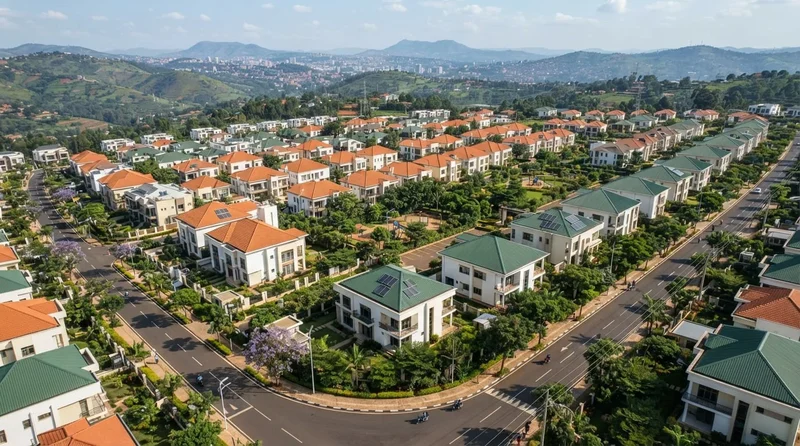
Last month, Rwanda’s Environment Management Authority (REMA) proposed studying a gradual shift away from individual homebuilding in favour of professionally planned housing developments. As populations increase, so does the demand for roads, drainage systems, sewer networks, electricity, schools and healthcare. Land ownership patterns, cultural preferences and financing options all shape how people become homeowners. It’s no longer just about building more homes. It’s about building communities that are safer, better connected and equipped. For many people across East Africa, building a home has always been a personal journey. Buy a piece of land, build when you can and expand over time as your finances allow. But Rwanda is beginning to question whether

Why Standalone Houses Are Becoming More Expensive While Apartment Prices Are Falling
According to the latest Kenya National Bureau of Statistics (KNBS) Residential Property Price Index for the first quarter of 2026, residential property prices increased by 4.8% compared to the same period last year. A few years ago, apartments became the preferred choice for many homebuyers. In areas where supply is outpacing demand, sellers may need to become more competitive on pricing, which can slow price growth or even lead to slight declines. If you’re looking for value and negotiating power, apartments may offer attractive opportunities in certain locations. Every few months, property reports give us a snapshot of how Kenya’s housing market is performing. But beyond the numbers lies an interesting story about changing buyer preferences. According to th

BuyRentKenya Returns as a Partner for the 6th Edition of the Luxury Living & Design Expo(LLDE)
Taking place from 31st July to 2nd August 2026 at the Village Market Rooftop, LLDE brings together some of the region’s leading names in real estate . Whether you’re looking to exhibit your brand, discover the latest industry trends, explore investment opportunities or gather ideas for your next project, the expo offers something for everyone. Hosted by BuyRentKenya, the Ownership 360 talk will bring together leading industry experts to discuss some of the most important topics shaping Kenya’s real estate market. East Africa’s premier property, architecture and design event is back, and BuyRentKenya is proud to once again partner with Village Market for the 6th Edition of the Luxury Living & Design Expo (LLDE). Taking place from 31st July to 2nd August 2026 at the Village

Freehold vs Leasehold: The Land Ownership Debate That Got Kenyans Talking
Most people only start paying attention to land tenure when they’re buying property, inheriting family land, or when a headline like this starts making rounds online . In simple terms, freehold land is land that you own indefinitely. For many Kenyans, freehold ownership represents permanence. With leasehold land, you have ownership rights for a specified period of time. In Kenya, this is often 99 years, although shorter lease periods also exist. Whether the recent claims were based on fact or misinformation, they succeeded in bringing an important conversation to the forefront. For the past few weeks, if you’ve spent any time on social media, you’ve probably come across conversations about freehold and leasehold land. The discussion picked up after claims

How AI Is Quietly Changing Property Search in Kenya
Artificial Intelligence (AI) and how it is quietly changing the way people search for property. Property seekers today have very different expectations compared to even a few years ago. People are no longer just looking for listings. They are looking for experiences that help them find the right property faster and with greater confidence. A few weeks ago, we had the privilege of attending the East Africa Property Investment (EAPI) Summit. As expected, there were plenty of conversations around investment opportunities, market trends, and the future of real estate in the region. One discussion, however, stood out. It was a conversation about Artificial Intelligence (AI) and how it is quietly changing the way people search for property.

How Fuel Prices Impact Real Estate
Fuel prices do have a ripple effect on the property market, sometimes in ways that aren’t immediately obvious. When fuel prices rise, transportation costs go up. And when transport becomes more expensive, so does construction. Fuel is a key driver of inflation. When fuel prices rise, the cost of living generally follows. When most people hear about fuel prices, their minds immediately go to cars or cooking. Rarely do they think about real estate. In fact, drawing a connection between these two industries doesn’t feel natural at first. However, the reality is that fuel prices do have a ripple effect on the property market, sometimes in ways that aren’t immediately obvious. So how exactly does this happen? Let’s get into it. READ ALSO :

The Iran Conflict and Its Potential Impact on Kenya’s Real Estate Market
Israel and the United States of America attacked Iran after weeks of rising military tension and threats. One of the most immediate global effects has been a rise in oil prices, a development that could have consequences in sectors such as real estate in countries like Kenya. Over time, these increased costs may also affect the price of housing, making it more expensive for buyers to enter the property market. Developers may need to focus more on cost efficiency, explore locally sourced building materials, and plan projects carefully in order to manage rising construction costs. A couple of weeks ago, on 28th February 2026, part of the world experienced a major shake-up: war. Israel and the United States of America attacked Iran after weeks of rising military tension and threats. While the attack was largel