Sameer Africa PLC has undertaken a significant pivot over the last decade, shifting from tyre manufacturing and distribution to becoming a key player in the industrial real estate sector.
In 2012, before a major accounting reclassification, Sameer Africa was widely recognised for its Yana tyre brand, a market leader contributing significantly to the company’s total revenue of KShs 4.08 billion. Manufactured goods, predominantly tyres, accounted for 86.8% (KSh 3.54 billion), complemented by imported tyres, which contributed another 10.5% (KShs 429.2 million) while rental income represented just 3.0% (KSh 122.7 million).
Market dynamics shifted sharply as cheaper tyre imports intensified competition and rising operational costs began to erode profit margins. By 2014, manufactured goods revenue had declined to KShs 3.08 billion, reflecting a 13.0% drop from 2012, and total revenue fell by 7.6% to KShs 3.78 billion, highlighting emerging vulnerabilities in the existing business model.
Table of Contents
Exiting Tyre Manufacturing
Facing mounting pressure, Sameer Africa exited tyre manufacturing in 2016 by closing its Nairobi-based plant. This marked a critical turning point, accelerating the revenue decline from manufactured goods, which fell sharply from KShs 1.90 billion in 2016 to just KShs 116.9 million by 2019—a dramatic 96.7% reduction from 2012. By 2022, revenues from manufacturing effectively ceased.
To mitigate this decline, the company initially increased tyre imports, which peaked at KShs 1.47 billion in 2018. Yet, logistical disruptions and fierce competition caused imported goods revenues to collapse to KShs 873,000 by 2024, representing a nearly complete exit from the tyre market.
Real Estate: A New Strategic Direction
In response to declining traditional revenue streams, Sameer Africa shifted its strategic focus towards industrial real estate. Initially classified as supplemental income, rental revenues steadily became central to the company’s business model. By 2024, investment property rentals reached KShs 388.6 million—up significantly from KShs 122.7 million in 2012—accounting for 99.7% of total revenue.
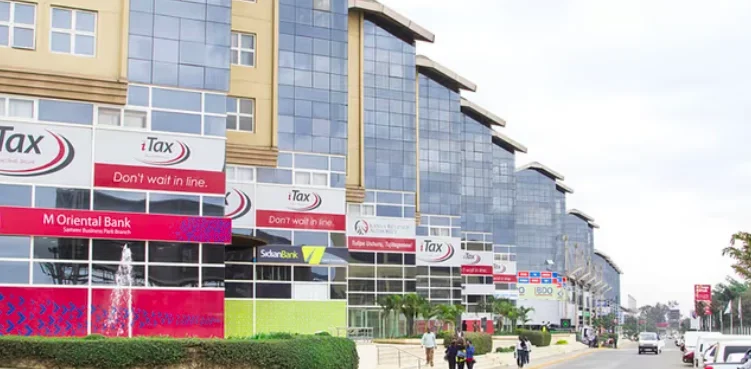
The real estate portfolio, notably Sameer Business Park and Rivaan Centre, encompasses over 750,000 square feet of prime industrial and commercial space, consistently achieving occupancy rates above 90%. This repositioning highlighted rental income as a principal revenue source, significantly contributing to profitability and stability.
The pivot to real estate has reshaped Sameer Africa’s financial trajectory. Although total revenue decreased dramatically—by 90.5% from KShs 4.08 billion in 2012 to KShs 389.5 million in 2024—the company’s profitability markedly improved. Despite the sharp fall in top-line revenue, net profits in 2024 surged to KShs 259.9 million, not only recovering from KShs 46.3 million in 2023 but also surpassing the KShs 188.5 million recorded in 2012, highlighting the stronger margins and operational efficiency of the real estate model.
Additionally, Sameer Africa achieved debt-free status by fully repaying KShs 540.7 million in borrowings in 2024. Concurrently, the company streamlined its operations, reducing its management and administration workforce significantly from 33 to 15 staff members in 2023, aligning human resources to the simplified operational model of property management.
While the real estate pivot provides financial stability, Sameer Africa faces new challenges, notably the risk associated with reliance on a single revenue stream. To ensure long-term sustainability, the company will need to pursue diversification strategies, maintain high occupancy rates, and effectively manage real estate market volatility.
Nevertheless, Kenya’s increasing demand for industrial and commercial spaces, propelled by urbanisation and economic growth, positions Sameer Africa to benefit substantially.