- While office buildings remain an important part of the commercial property market, warehouses are increasingly becoming one of the most attractive real estate investments.
- The COVID-19 pandemic accelerated hybrid working, meaning many companies no longer needed as much office space.
- As e-commerce grows, businesses need modern facilities that can store and move goods quickly and efficiently.
- Today, warehouses are quietly taking centre stage.
Ten years ago, if you wanted to impress investors, you built an office tower.
Today, you might get their attention faster by building a warehouse.
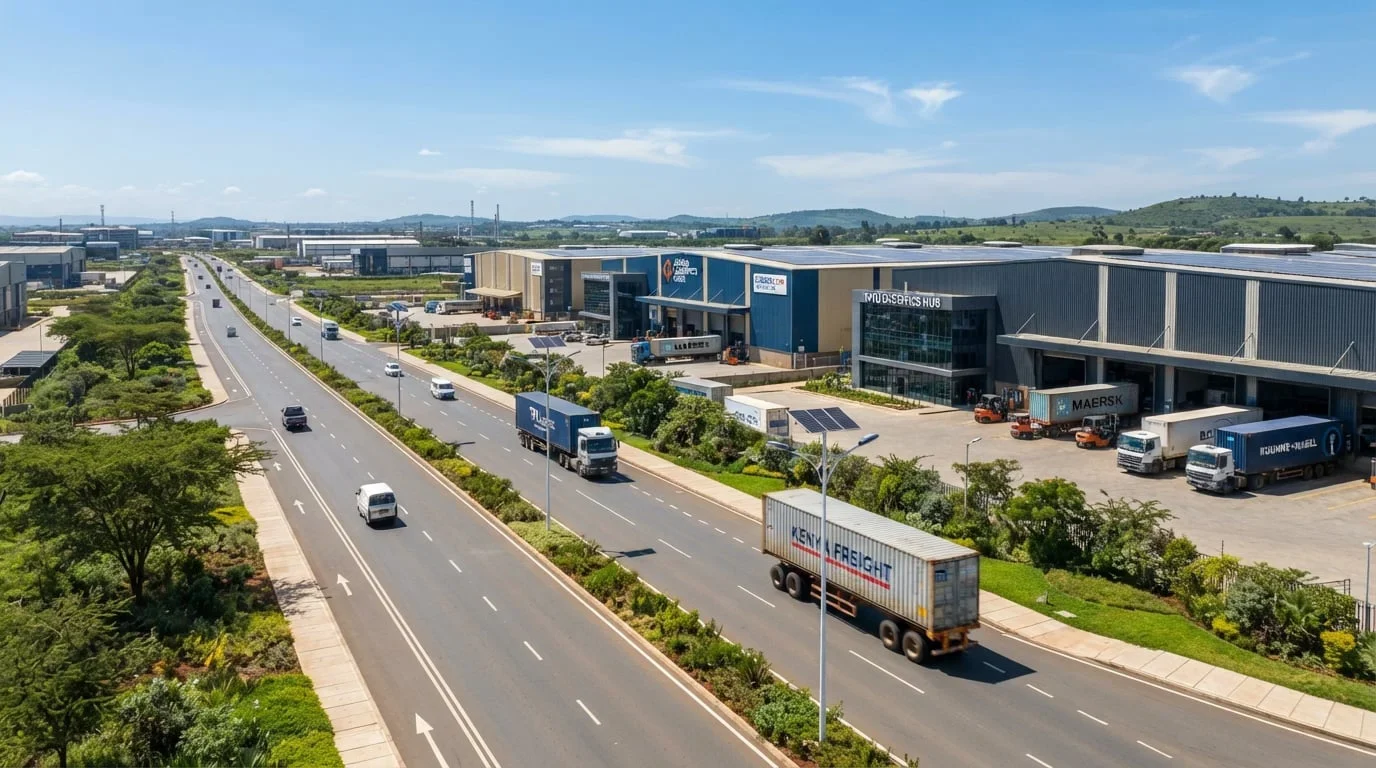
It sounds surprising, but it’s exactly what is happening in parts of Kenya as investors shift their focus towards logistics parks and industrial developments. While office buildings remain an important part of the commercial property market, warehouses are increasingly becoming one of the most attractive real estate investments.
So, what changed?
READ ALSO: Why Commercial Real Estate in Kenya is Facing New Challenges
Table of Contents
Investors Follow Demand
Real estate has always been about one thing: demand.
Years ago, demand for office space was booming. As businesses expanded, developers responded by building office blocks across areas like Westlands, Upper Hill and Kilimani. For a long time, it was a winning formula.
But over the years, the market changed.
The COVID-19 pandemic accelerated hybrid working, meaning many companies no longer needed as much office space. At the same time, Nairobi had already seen years of office construction, creating more supply than demand in some locations.
Prime Grade A offices are still performing well, but investors have become more selective. Instead of asking, “Where can we build another office?” many are now asking, “Where is demand growing next?”
The Quiet Rise of Warehouses
The answer, increasingly, is logistics.
Think about how we shop today.
Whether you’re ordering groceries, electronics or furniture online, every product follows the same journey. It is stored in a warehouse, packed, sorted and transported before it reaches your doorstep.
As e-commerce grows, businesses need modern facilities that can store and move goods quickly and efficiently. Manufacturers, supermarkets, pharmaceutical companies and distributors all rely on quality warehouse space to keep their operations running.
For investors, that creates a different kind of opportunity.
Unlike some office tenants who may downsize or relocate, warehouse tenants often invest heavily in fitting out their facilities and tend to sign longer leases. That can translate into more stable, long-term rental income.
Kenya Already Has Success Stories
This isn’t just a global trend, it’s happening here in Kenya.
One of the best examples is ALP North in Tatu City, a Grade A logistics park developed by Africa Logistics Properties (ALP). The development is fully occupied, showing the strong demand for modern warehouse space.
Investor confidence has also been evident in the ALP Industrial REIT, East Africa’s first industrial Real Estate Investment Trust. When it was launched, the offer was oversubscribed, meaning investors wanted to buy more shares than were available. That’s a strong signal that institutional investors see long-term potential in logistics real estate.
Developments around Tatu City, Athi River and other industrial corridors continue to attract manufacturers, logistics companies and distributors looking for modern, well-connected facilities.
Why Location Matters
Warehouses aren’t being built just anywhere.
Developers are targeting locations with good transport links, access to major highways and enough land for large-scale industrial developments.
Areas such as Athi River have long been industrial hubs, while Tatu City has evolved into a mixed-use development that combines residential, commercial and industrial spaces. These locations allow businesses to move goods more efficiently, reducing transport costs and improving delivery times.
As infrastructure continues to improve, more logistics developments are likely to emerge along key transport corridors.
Why This Matters Even If You’re Not Buying a Warehouse
You may never invest in a logistics park, but this trend still matters.
Large commercial developments often shape the growth of surrounding areas. As businesses move into logistics hubs, they create jobs, attract supporting services and increase demand for housing nearby.
That means areas around successful industrial and logistics developments can also see growth in residential estates, retail centres, schools and other amenities.
In other words, where investors choose to build today can influence where people choose to live tomorrow.
A Sign of a Changing Market
The rise of warehouses doesn’t mean office buildings are disappearing.
Rather, it reflects how Kenya’s economy is evolving.
As online shopping grows, manufacturing expands and regional trade increases, the property market is adapting to meet those needs. Investors are simply following the demand.
A decade ago, office towers represented the future of commercial real estate.
Today, warehouses are quietly taking centre stage.
And while they may not have the glamour of a glass office building, they are becoming some of the most important pieces of infrastructure powering Kenya’s economy, and that’s exactly why investors are paying attention.
READ ALSO: The Nairobi Metropolitan Area (NMA) Industrial Market Overview