If you are thinking about buying a home in Nairobi, one of the first questions you will probably ask is: How much can I actually afford?
It is an important question because the answer is not simply about finding a house you like and checking whether the price fits your salary.
Your deposit, monthly income, existing loans, interest rate, loan term and other household expenses all affect what you can realistically spend.
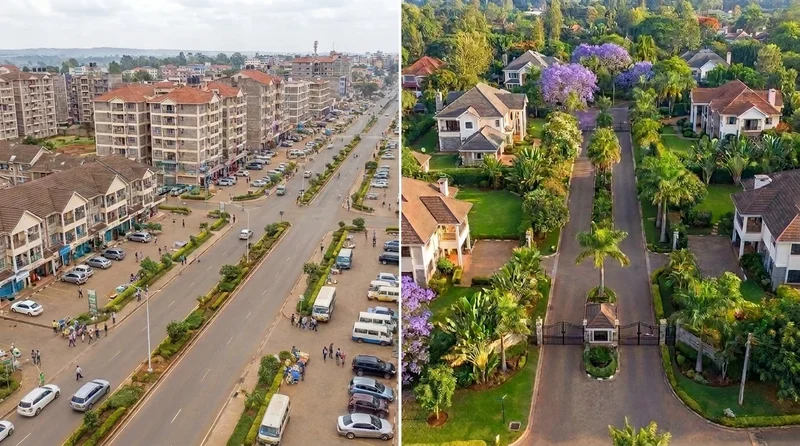
And with property prices varying widely across Nairobi, your budget can also determine where you look and the type of home you can consider.
So, before you start saving listings, here is what to look at when working out how much house you can afford in Nairobi in 2026.
Start with what you can comfortably pay each month
The price of a home is only one part of the calculation.
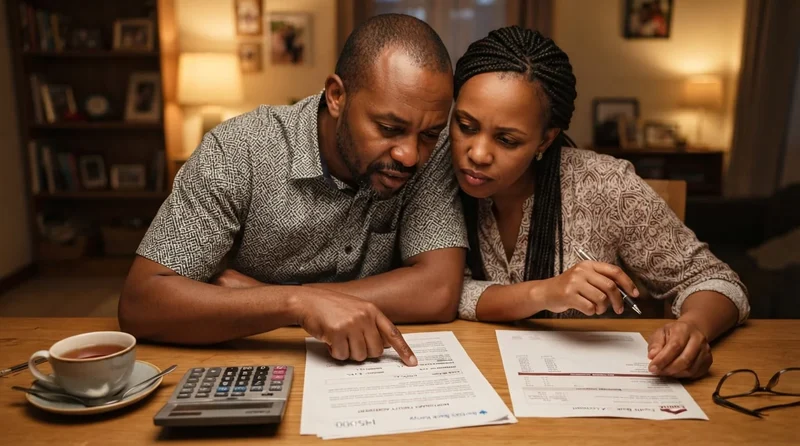
If you are buying through a mortgage, the bigger question is what monthly repayment you can manage without putting too much pressure on the rest of your finances.
For example, a KSh10 million home does not mean you need KSh10 million in cash. You may put down a deposit and finance the remaining amount through a mortgage. But the size of that loan, the interest rate and the repayment period will determine how much you pay every month.
This is why two people earning the same salary may not have the same buying power.
One may have other loans, school fees or significant monthly expenses, while another may have fewer financial commitments.
Your income matters, but your overall financial position matters too.
What are property prices looking like in Nairobi?
There is no single "Nairobi house price."
The price changes significantly depending on the neighbourhood, property type, size and condition.
Current asking-price data from Kenya Property Centre puts the median asking price for property for sale in Nairobi at KSh21.6 million in Q3 2026. For apartments specifically, the median asking price was KSh13 million, while houses had a median asking price of KSh100 million. These figures are based on listings, so they represent asking prices rather than completed sale prices.
That distinction is important.
A listing price is what a seller is asking for a property. It does not necessarily mean that is the final price at which the property changes hands.
Official data from the Kenya National Bureau of Statistics also shows that residential property prices have been moving differently depending on the type of property. In Q1 2026, Kenya's overall residential property price index increased by 4.8% year-on-year.
So when thinking about affordability, it helps to look at the specific type of property and area you are interested in rather than relying on one Nairobi-wide figure.
What does your budget get you?
This is where things get interesting.
You could have a budget of KSh5 million, KSh10 million, KSh15 million or KSh20 million, but the kind of property you can find will vary depending on where you search.
For example, current Nairobi apartment listings on Kenya Property Centre had a median asking price of about KSh14.7 million in August 2026.
That does not mean every apartment costs KSh14.7 million. The same data shows a wide range of asking prices.
And this is where being flexible about location can make a difference.
Instead of starting with:
"I want a three-bedroom apartment in Nairobi."
You may get better results by starting with:
"I have KSh X to spend. Where can I find the type of home I want?"
That small change can open up more options.
Your location can change your budget
The same amount of money can buy very different properties depending on where you look.
Westlands, Kilimani, Kileleshwa, Karen and other established neighbourhoods have different property markets, while areas further from the city centre and satellite towns can offer different price points.
For instance, recent data puts the median asking price for apartments in Westlands at KSh13.3 million, while the median for apartments across Nairobi was KSh13 million.
But even within the same neighbourhood, prices can vary considerably depending on the development, size, age, amenities and location.
This is why your property search should not stop at the headline price.
Look at what you are getting for the money.
Don't forget the deposit
If you are using a mortgage, you will also need to think about the amount you need upfront.
The larger your deposit, the smaller the amount you need to borrow.
For example, if you were buying a KSh10 million property and put down KSh2 million, you would need to finance KSh8 million.
But if you put down KSh3 million, your loan would reduce to KSh7 million.
That difference affects your monthly repayment and the total amount of interest you pay over the life of the loan.
The actual deposit requirement will depend on the lender, the property and your circumstances, so it is worth getting specific terms from your lender before making assumptions.
What about mortgage rates in 2026?
Interest rates are another important part of the affordability equation.
As of August 11, 2026, the Central Bank Rate stood at 8.75%. CBK's latest published figures also show the average commercial banks' lending rate at 14.39% in July 2026.
Your actual mortgage rate may be different from the average lending rate because lenders price loans differently depending on the product and borrower.
But the broader point is simple: the interest rate can make a significant difference to what you pay over time.
For this reason, don't only ask a lender:
"How much can you lend me?"
Also ask:
"How much will I pay every month, and how much will I have paid by the end of the loan?"
Remember the costs beyond the house
It is easy to focus entirely on the purchase price and forget everything else.
Depending on the transaction, you may need to budget for costs such as legal fees, valuation, stamp duty, insurance, mortgage-related charges, moving costs and ongoing maintenance.
If you are buying an apartment, there may also be a service charge.
These costs can affect how much cash you need upfront and how much you can comfortably spend on the property itself.
So if you have KSh10 million available, it does not automatically mean you should search for KSh10 million homes.
Some of that money may need to cover the costs of completing the purchase and setting up your new home.
So, how much house can you afford?
There isn't one answer.
A better way to look at it is to work backwards.
Start with your monthly income and existing financial commitments.
Then consider how much you have available for a deposit and other upfront costs.
From there, find out how much a lender is willing to finance and what the monthly repayment would be at the applicable interest rate and loan term.
Finally, look at the properties available within that budget.
You may find that your ideal home is in a different neighbourhood, a different property type or a slightly different price range from what you originally had in mind.
And that is okay.
Buying a home is not just about finding the most expensive property you can qualify for. It is about finding a property that fits your finances and your life.
The right place to start is not "What house do I want?"
It is:
"What can I comfortably afford?"
From there, the search becomes a lot clearer.