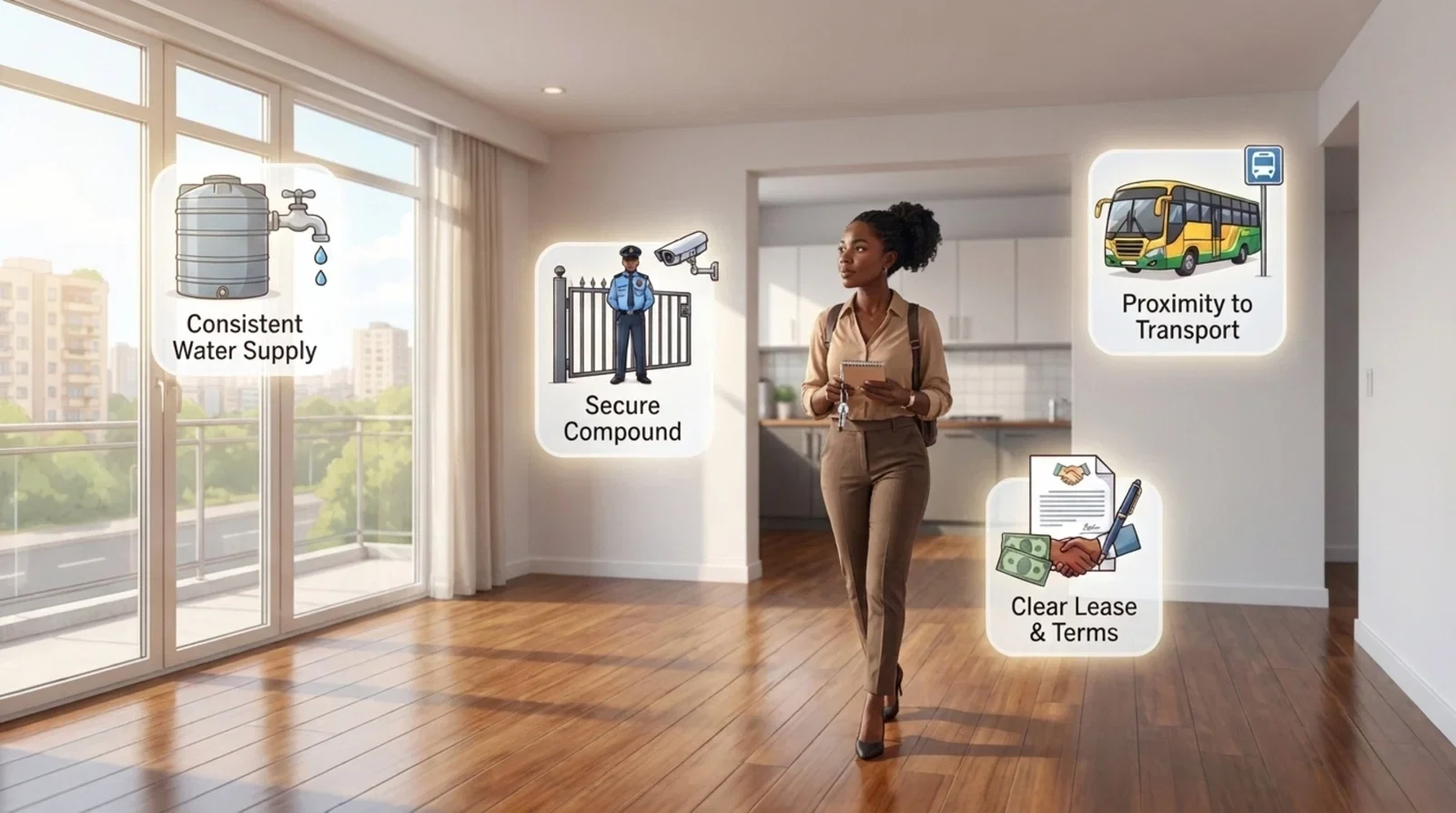
- It is very easy to find a house you love, only to realise that it does not fit your budget.
- Rental prices vary significantly depending on where you look and the type of property you want.
- If your rental budget is between KSh20,000 and KSh40,000, you have quite a few neighbourhoods to consider, particularly outside Nairobi's most expensive areas.
- Before you start viewing houses, work out what you can comfortably spend each month, including your other regular expenses. Then look at the neighbourhoods and property types that fit that budget.
Looking for a house to rent should always start with one major question: How much can I afford?
Most people, however, start with the kind of house they want, the neighbourhood they like or the rent they have seen online. And that can be counterproductive.
It is very easy to find a house you love, only to realise that it does not fit your budget.
But knowing what you can afford goes a little deeper than the rent on the listing. Rent is only one part of the cost of living in a house. You also need to think about your income, other financial commitments, transport, utilities, service charge and the upfront costs of moving in.
So, how much rent can you realistically afford in Nairobi in 2026?
What does rent look like across Nairobi?
Rental prices vary significantly depending on where you look and the type of property you want.
Recent rental data shows that Nairobi's rental market covers a wide range, from relatively affordable apartments in areas such as Embakasi and Kasarani to premium homes in neighbourhoods such as Westlands, Lavington and Karen.
Here is what different budgets can get you.
What can you get for KSh20,000–KSh40,000?
If your rental budget is between KSh20,000 and KSh40,000, you have quite a few neighbourhoods to consider, particularly outside Nairobi's most expensive areas.
In Kasarani and Roysambu, a one-bedroom apartment can fall within roughly the KSh22,000–KSh38,000 range. South B and South C are another option, although you may be closer to the lower end of the one-bedroom market.
You can also look at Donholm, Buruburu, Umoja and Embakasi, where one-bedroom apartments can be found for less, leaving room in your budget for a larger unit or other living expenses.
Further out, areas such as Ruiru, Kitengela and Kahawa Sukari can offer even more space at this budget.
For someone prioritising affordability and space over being close to the city centre, these areas can significantly widen the options.
READ ALSO: How Much Money Should You Spend on Rent in Kenya?
What can you get for around KSh50,000?
A KSh50,000 budget gives you access to more established neighbourhoods and a wider selection of apartments.
In Kilimani, one-bedroom apartments can range from around KSh50,000 to KSh85,000, putting some units within reach of this budget. Kileleshwa also has one-bedroom apartments starting at around KSh50,000.
If you want more space, Ruaka and the Two Rivers corridor have two-bedroom apartments ranging roughly from KSh55,000, while South B and South C can offer two-bedroom options from around KSh45,000.
At this budget, you are essentially choosing between location and space. Staying closer to central Nairobi may mean a smaller apartment, while looking further out could get you more bedrooms.
What can you get for around KSh80,000?
At around KSh80,000, the choice becomes broader, particularly if you want a two-bedroom apartment.
In Kilimani, two-bedroom apartments generally fall around KSh75,000–KSh130,000. Kileleshwa has two-bedroom options from roughly KSh75,000, while Westlands can start around KSh80,000 for a two-bedroom.
You can also look at Lavington, where one-bedroom apartments can fall within this budget, or Parklands, where two-bedroom apartments can range from around KSh70,000 to KSh100,000.
So at KSh80,000, you could choose a larger home in a mid-market neighbourhood or a smaller unit in a more premium location.
What can you get for KSh100,000–KSh150,000?
This budget opens up considerably more choice in Nairobi's established neighbourhoods.
In Kilimani, two-bedroom apartments can reach around KSh120,000, while three-bedroom units can go from roughly KSh130,000. In Kileleshwa, two-bedroom apartments can fall around KSh75,000–KSh110,000, with three-bedroom options reaching approximately KSh160,000.
Westlands offers two-bedroom apartments around KSh80,000–KSh110,000, while three-bedroom apartments can reach KSh170,000. Lavington sits at the higher end, with two-bedroom apartments around KSh90,000–KSh130,000 and three-bedroom units starting at approximately KSh140,000.
At this level, you are also more likely to find newer developments and amenities such as gyms, swimming pools, parking and better security.
What about KSh150,000 and above?
With a budget of KSh150,000 or more, you can consider some of Nairobi's more premium rental markets.
Westlands, Lavington, Kileleshwa, Karen, Kitisuru and Spring Valley offer larger apartments, townhouses and standalone homes, depending on the exact budget.
For example, recent market data places three-bedroom apartments in Lavington at around KSh140,000–KSh200,000, while premium three-bedroom apartments in Westlands and Spring Valley can start from approximately KSh175,000. In Karen, Kitisuru and other premium suburbs, the market extends into much larger townhouses and standalone houses.
At this level, the property itself becomes an important factor. Two homes in the same neighbourhood can have very different rents depending on their size, age, finishes, amenities and location within the neighbourhood.
Don't forget the costs beyond rent
Whichever budget you choose, remember that rent is not the only cost.
You may also need to budget for a security deposit, first month's rent, service charge, parking and utilities. Your commute is another important consideration.
A KSh50,000 house that adds KSh15,000 to your monthly transport costs may not actually be cheaper than a KSh60,000 house that is closer to work.
So when comparing properties, look at the total cost of living there, not just the rent.
Start with your budget, then find the property
The right rental budget will be different for everyone.
Before you start viewing houses, work out what you can comfortably spend each month, including your other regular expenses. Then look at the neighbourhoods and property types that fit that budget.
You may find that KSh50,000 gets you a one-bedroom in Kilimani but a two-bedroom in South B or Ruaka. At KSh100,000, you could be looking at a two-bedroom in Westlands or a larger apartment in another neighbourhood.
That is the important thing to remember when renting in Nairobi: your budget does not just determine how much house you can get. It also determines where you can look.
And knowing that before you start your search can save you from falling in love with a house you cannot comfortably afford.
READ ALSO: These Housing Markets Are Attracting Renters—Is It Time to Invest?