When we talk about affordable housing, much of the conversation focuses on how many homes can be built and how much they will cost. But there is another question worth asking: who will buy these homes once they are ready?
For a property developer, completing a housing project is only part of the job. The money invested in construction still needs to be recovered, loans need to be repaid, and contractors need to be paid. If selling the homes takes longer than expected, the developer can find themselves under financial pressure.
This is one reason offtake agreements matter, particularly when private developers partner with the government to deliver affordable housing.
But what exactly is offtake, how does it work, and what happens when things do not go according to plan?
READ ALSO: Explained: Kenya’s Affordable Housing Model
What Is Offtake in Real Estate?
In simple terms, offtake is an agreement in which a buyer commits to purchasing a specified number of units from a development, subject to agreed conditions.
For example, a developer could plan to build 500 affordable homes. Rather than relying entirely on individual buyers to purchase the homes after construction, the developer may enter into an agreement with a government agency to purchase an agreed number of completed units.
The agreement sets out the terms of the arrangement, including the units involved, the price and the conditions that must be met.
In Kenya, the Affordable Housing Act, 2024, and its accompanying regulations provide a framework for the Affordable Housing Board to enter into offtake agreements for qualifying housing units.
The idea is to give developers greater certainty about how their homes will be purchased, while helping the government increase the supply of affordable housing.
How Does Offtake Work When Developers Partner With the Government?
A government-private developer partnership brings together different resources and responsibilities.
The government or a public agency may provide land, facilitate the project or commit to purchasing qualifying units. The private developer may be responsible for financing, designing and constructing the homes, depending on the agreement.
Here is a simple example.
A developer plans to construct 1,000 affordable housing units. The project requires substantial investment in land preparation, materials, labour and infrastructure.
If the developer has to find individual buyers for every unit, it may take time to recover that investment. But if an offtake agreement covers an agreed number of completed homes, the developer has a clearer route to selling those units, provided the contract conditions are met.
This can make the project more attractive to lenders and investors because there is greater certainty about the intended buyer.
However, the exact arrangement matters. An offtake agreement is not automatically a promise to pay for every unit regardless of whether construction is completed or the agreed conditions are met.
Why Is Offtake Important to Property Developers?
One of the biggest challenges in property development is managing the gap between spending money on construction and receiving money from sales.
Developers need to pay their expenses throughout the project, but the income from selling the homes may come much later.
Offtake can help address three challenges.
1. It provides greater certainty about sales. Knowing that a buyer has committed to purchasing an agreed number of units can reduce the uncertainty of finding buyers after construction.
2. It can make financing easier to secure. Lenders may be more willing to finance a project when there is a credible purchase agreement in place. However, they will still consider the buyer's ability to pay, the contract terms and other project risks.
3. It can support larger housing projects. When developers have greater certainty about recovering their investment, they may be better placed to participate in projects that require substantial upfront capital.
For the government, the arrangement can help mobilise private sector investment and construction expertise to deliver housing.
But there is a difference between having a buyer on paper and having a financially secure project.
What Can Go Wrong With Offtake Agreements?
Although offtake can reduce some risks, it does not eliminate every challenge associated with property development.
1. What happens if payment is delayed?
Even when a buyer has committed to purchasing the homes, the developer still needs to understand when payment will be made and what conditions must be fulfilled first.
If payment is delayed after the developer has completed the units, loan repayments and other expenses do not simply stop.
This can create cash-flow problems, particularly for developers who rely on borrowed money to finance construction. The longer the delay, the greater the potential cost.
That is why payment timelines, funding arrangements and the consequences of failing to meet contractual obligations need to be clear from the beginning.
2. What if the intended buyers cannot afford the homes?
This is an important part of Kenya's affordable housing conversation.
A developer may build homes at an agreed price, but the intended buyers still need to raise deposits, qualify for financing or meet the required payment terms.
If they cannot, the homes may be difficult to allocate or sell, even when there is a genuine need for affordable housing.
A March 2026 analysis by Financial Sector Deepening Kenya highlighted this challenge in the local market: households that need homes are not always financially ready to purchase the units being built.
This is why offtake needs to be considered alongside access to mortgages, realistic pricing and ways of assessing whether potential buyers can afford the homes.
3. Who takes responsibility when the project runs into problems?
Construction projects do not always go according to plan. Costs can rise, completion dates can shift, and completed units may fail to meet agreed specifications.
In a government-private developer partnership, the contract needs to explain who carries the risk in each situation.
For example, what happens if the developer fails to complete the homes on time? What if the purchasing agency cannot meet its payment obligations? And what happens if the completed units do not meet the agreed standards?
Clear responsibilities and enforceable contract terms help both parties understand their obligations before committing significant resources.
What Does Offtake Look Like in Kenya?
Kenya has been exploring public-private partnerships as one way to mobilise investment for affordable housing.
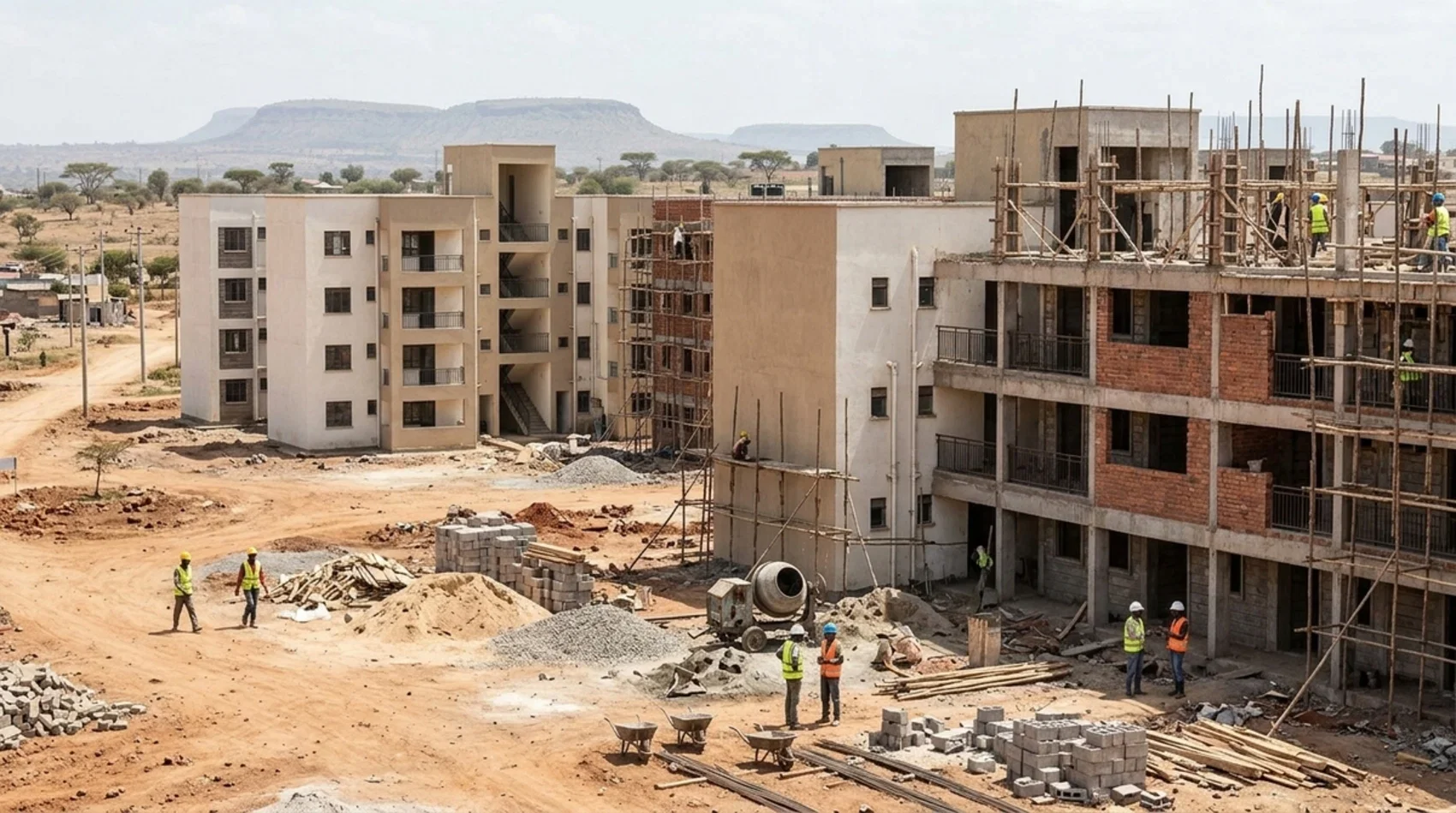
One example is the proposed Stoni Athi Affordable Housing Project in Athi River, listed by the Public-Private Partnerships Directorate. The project involves 2,820 affordable housing units and 200 market-rate units on National Housing Corporation land. The project brief outlines two phases, with a construction period of two years and an offtake period of one year for each phase.
The project is listed in the tender-preparation stage. It is therefore an example of how an offtake arrangement can be structured, rather than evidence of a completed project.
The proposed development also illustrates how affordable and market-rate homes can be combined within a larger housing project.
For arrangements like this to work, the parties need to consider not only how the homes will be built, but also how the project will be financed, how the purchasing commitment will be fulfilled and whether the homes meet the needs of their intended buyers.
READ ALSO: Pricing of The Affordable Housing Houses By The Government of Kenya
Can Offtake Help Solve Kenya's Affordable Housing Challenge?
Offtake can be useful because it addresses one of the uncertainties developers face: finding a reliable buyer for completed homes.
But it is not a complete solution on its own.
A successful arrangement needs credible financing, clear contractual obligations and a realistic understanding of demand. It also needs to consider what happens after the homes are built, particularly whether the intended buyers can afford them.
For developers, this means looking beyond the promise of a purchase agreement and understanding the conditions attached to it. For the government, it means ensuring that commitments are financially and operationally realistic.
And for homebuyers, what matters is whether the homes being delivered are accessible, appropriately located and affordable.
Ultimately, the success of an affordable housing project should not be measured by the number of units built alone. It should also consider whether those homes can reach the people they were intended for and whether the project can be delivered in a financially sustainable way.