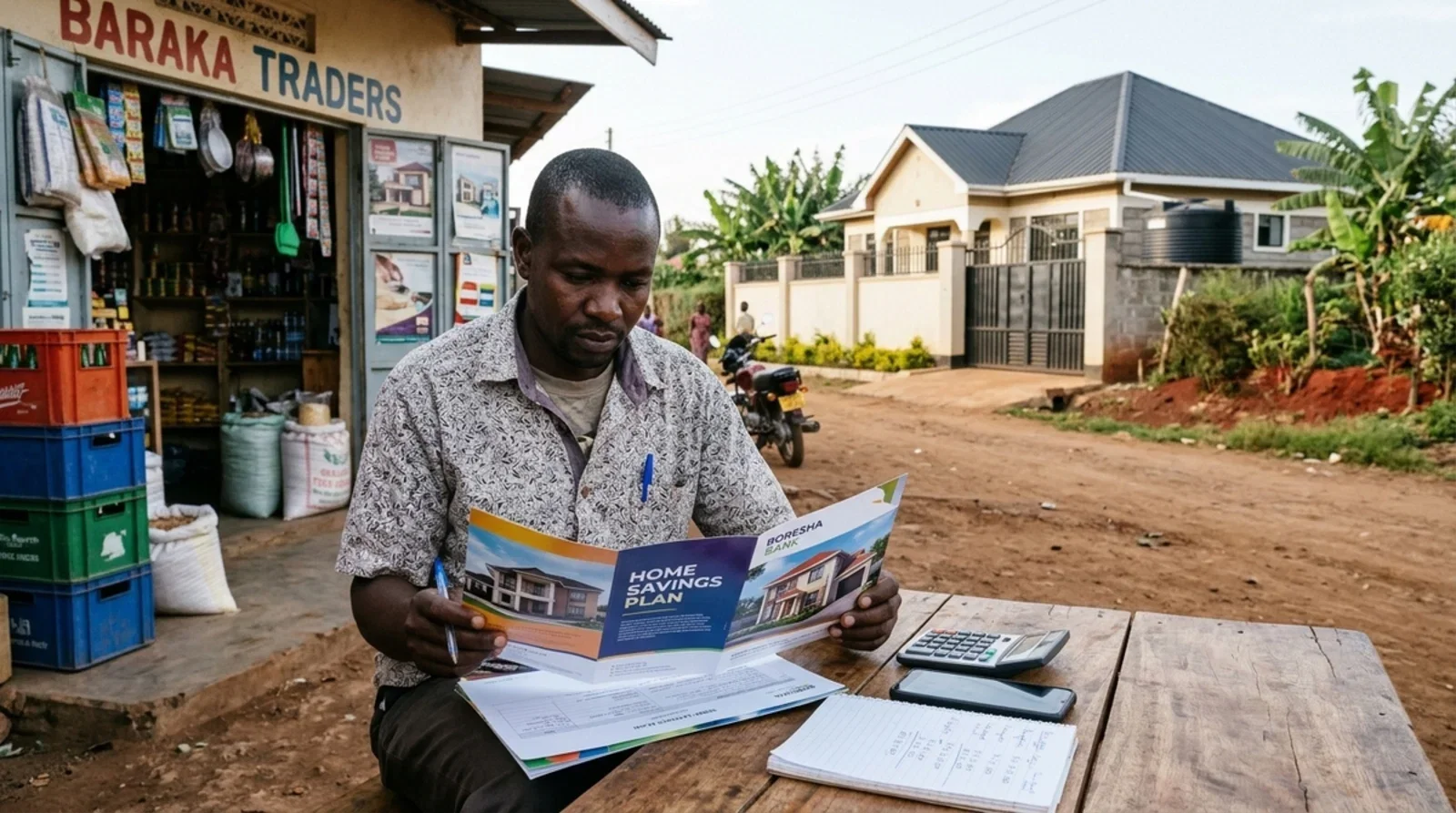
- Housing cooperatives are increasingly exploring ways to make home financing more accessible to people whose incomes do not follow a fixed monthly schedule.
- Someone who earns daily can gradually set aside money towards a home, while someone with seasonal earnings may need a repayment arrangement that accommodates fluctuations in income.
- Kenya's mortgage market remains relatively small, with approximately 30,015 active mortgage accounts reported by the Kenya Mortgage Refinance Company (KMRC).
For many Kenyans, owning a home is a long-term goal. However, getting the money to buy or build one can be challenging, especially when you do not have a regular monthly salary.
Traditional mortgage arrangements often favour people in formal employment, with predictable incomes, payslips and the financial records required by lenders. This leaves out a large section of Kenyans who earn a living through small businesses, farming, transport services and other informal activities.
But does being self-employed mean you cannot own a home?
Housing cooperatives are increasingly exploring ways to make home financing more accessible to people whose incomes do not follow a fixed monthly schedule.
READ ALSO: Navigating the Pressures of Owning a Home in Kenya
How Are Housing Cooperatives Changing Home Financing?
For many informal-sector workers, getting a mortgage can be difficult. A small business owner, farmer or boda boda operator may earn different amounts each day or month, making it harder to commit to fixed monthly repayments.
Housing cooperatives are exploring alternative financing arrangements to address this challenge. One example is the cyclic mortgage approach, which allows repayments to be structured around how borrowers earn rather than relying entirely on fixed monthly instalments.
You and Me Housing Cooperative Society is among the institutions exploring this model, targeting farmers, boda boda operators and small-scale traders. Some of its members reportedly save as little as KSh100 daily towards homeownership.
The idea is to make home financing more responsive to different income patterns. Someone who earns daily can gradually set aside money towards a home, while someone with seasonal earnings may need a repayment arrangement that accommodates fluctuations in income.
This challenges the assumption that homeownership is only possible for people with regular monthly salaries.
Why Is It Difficult for Informal Workers to Get Mortgages?
One of the biggest challenges in Kenya's housing finance market is that many lending arrangements are designed around formal employment.
When applying for a conventional mortgage, lenders typically assess a borrower's income, existing financial commitments, credit history and ability to repay the loan.
For salaried employees, demonstrating this can be relatively straightforward through payslips and bank statements.
However, consider a farmer whose income comes mainly during harvest seasons or a small business owner whose earnings fluctuate depending on sales. They may have the ability to repay a loan over time but struggle to demonstrate a consistent monthly income.
This does not necessarily mean they cannot afford a home. It means traditional assessment methods may not fully reflect their financial circumstances.
Kenya's mortgage market remains relatively small, with approximately 30,015 active mortgage accounts reported by the Kenya Mortgage Refinance Company (KMRC). This highlights the limited reach of conventional mortgage financing and the need for alternative options.
How Can Daily Savings Help You Work Towards Homeownership?
One way to start working towards owning a home is by developing a consistent savings habit.
You do not necessarily need a large amount of money available at once. Setting aside smaller amounts regularly can help you gradually build funds for a deposit, land purchase or construction.
For example, someone who saves KSh100 daily would accumulate:
-
Monthly savings: Approximately KSh3,000
-
Annual savings: KSh36,500
-
Savings over five years: KSh182,500
This is before any interest, investment returns or applicable charges.
While this may not be enough to purchase a home outright, it can provide a starting point towards a larger financial goal.
Joining a housing cooperative or SACCO may also provide access to structured savings plans and financing options, depending on the institution's requirements.
READ ALSO: Why Are Homeownership Rates Dropping in Urban Areas Compared to Rural Areas in Kenya?
What Should You Consider Before Joining a Housing Cooperative?
Housing cooperatives can provide an alternative route to property ownership, but it is important to understand how they operate before committing your money.
1. Understand the savings requirements
Find out how much you are expected to contribute, how frequently you should make payments and whether there are penalties for missed contributions.
2. Understand the loan terms
Ask about interest rates, repayment periods, deposit requirements and additional fees. Flexible repayments do not necessarily mean cheaper financing.
3. Check the cooperative's credibility
Confirm that the society is properly registered and review its financial position, governance and track record. If it operates a deposit-taking SACCO, check its licensing status with SASRA.
4. Understand property ownership arrangements
If you are saving towards a plot or house through a cooperative, establish how the property will be allocated, whose name will appear on the title and when ownership will be transferred.
Could Flexible Housing Finance Make Homeownership More Accessible?
Kenya's homeownership challenge is not simply about the number of houses being built. It is also about whether people can access the financing needed to buy them.
While conventional mortgages remain important, they may not work for everyone, particularly those with irregular incomes. Housing cooperatives, SACCOs and other alternative financing arrangements could help bridge this gap by recognising different income patterns and encouraging consistent savings.
Ultimately, owning a home does not have to begin with a large salary or substantial savings. It can start with a realistic savings plan, suitable financing and a clear understanding of what you can afford.
For many Kenyans, the opportunity may lie in finding a way to finance a home that works with how they earn.