- You may find two apartments in the same neighbourhood with similar layouts and rental prices, only to discover that one has a considerably higher monthly service charge than the other.
- Apartment service charge is a regular fee collected to pay for the management, maintenance and running of shared areas and facilities within a residential development.
- The amount is not necessarily the same for every apartment because the share payable can depend on the unit's entitlement under the sectional arrangement.
When comparing apartments in Kenya, most buyers and tenants pay attention to the things they can easily see: the location, size, number of bedrooms, finishing and price. But there is another cost that deserves just as much attention: the service charge.
You may find two apartments in the same neighbourhood with similar layouts and rental prices, only to discover that one has a considerably higher monthly service charge than the other. Why is that? And what exactly are you paying for?
For many people, service charge is simply another monthly expense. But it plays an important role in keeping an apartment building running, maintaining shared facilities and protecting the property's condition over time.
The question is not necessarily whether a development charges a service fee, but whether the amount being collected is reasonable and whether residents are getting the services they are paying for.
So, what is apartment service charge in Kenya, what does it cover and what should you consider before buying or renting?
What is Apartment Service Charge?
Apartment service charge is a regular fee collected to pay for the management, maintenance and running of shared areas and facilities within a residential development.
Unlike rent or mortgage payments, which relate to occupying or owning an individual unit, service charge contributes towards the parts of the property that residents use collectively.
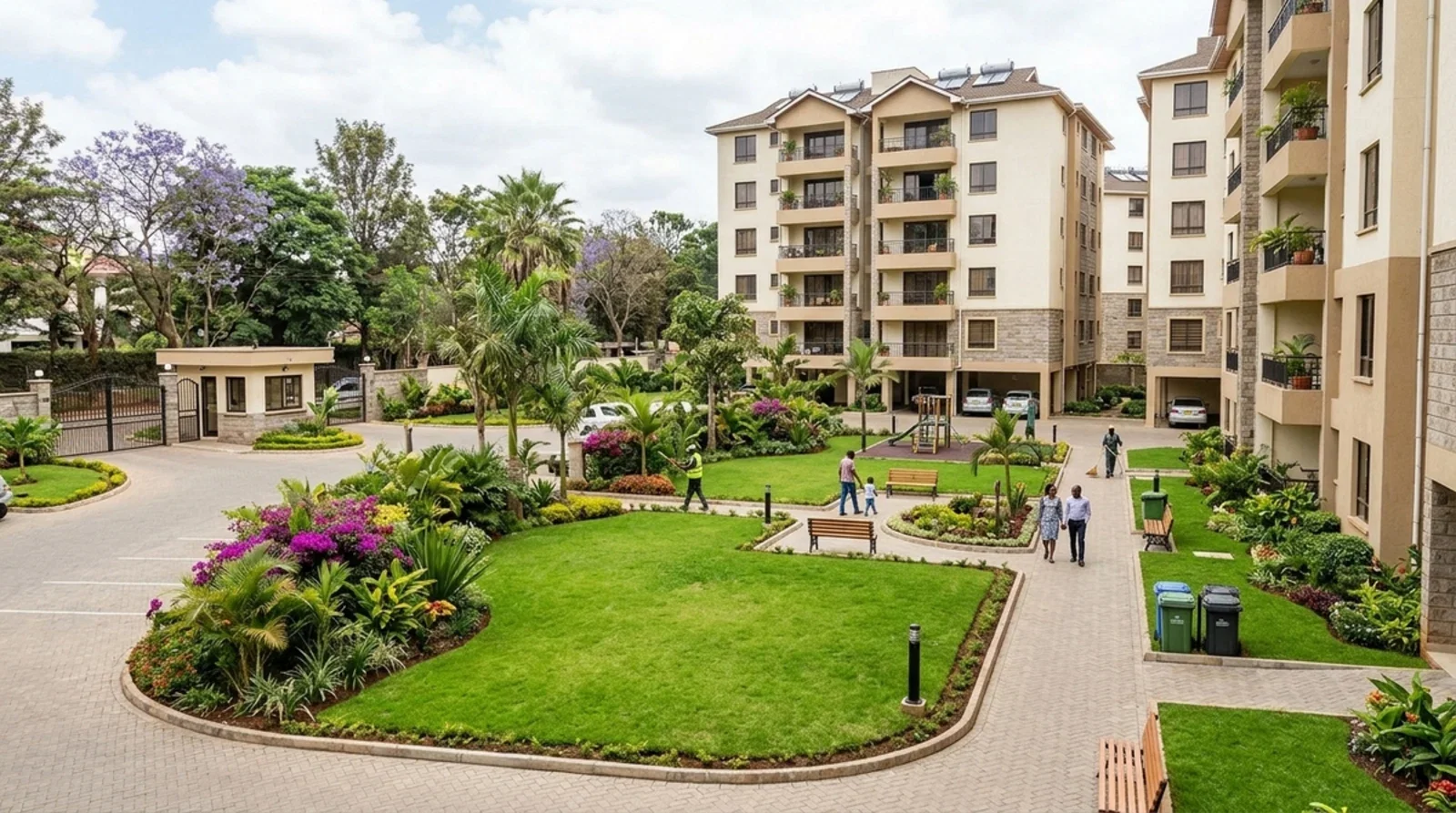
Think about the entrance, staircases, lifts, corridors, parking areas, gardens, security systems and other shared facilities. These areas need to be cleaned, maintained, repaired and managed, and the costs are shared among the property owners.
Depending on the development, the service charge may be paid monthly, quarterly or according to an agreed payment schedule.
For tenants, it is important to confirm whether the advertised rent includes service charge or whether it is payable separately. This should be clearly stated in the tenancy agreement.
What Does Apartment Service Charge Cover?
The services covered will depend on the type of development, the facilities available and how the property is managed. However, a typical apartment service charge may contribute towards:
- Security: Payments for security guards, CCTV surveillance, electric fencing, access control and other security arrangements.
- Cleaning and garbage collection: Cleaning of shared spaces such as corridors, staircases, lifts, parking areas and entrances, as well as waste collection and disposal.
- Water and common utilities: Running and maintaining water pumps, storage tanks, shared water systems and lighting in common areas. Some developments may also include the cost of water used in shared facilities.
- Lift and generator maintenance: Regular servicing and repairs of lifts, generators, pumps and other equipment used by residents.
- Landscaping and outdoor maintenance: Looking after gardens, lawns, driveways, walkways and other outdoor spaces.
- Shared amenities: Maintaining swimming pools, gyms, children's play areas, clubhouses and other facilities available to residents.
- Building insurance and general maintenance: Depending on the arrangement, contributions may also cover building insurance, common-area repairs and other administrative expenses.
Not every apartment will offer all these services. A simple apartment block with no lift, swimming pool or generator will naturally have different running costs from a development with several amenities and extensive security arrangements.
How is Apartment Service Charge Determined In Kenya?
There is no single fixed service charge that applies to every apartment in Kenya. The amount depends on the development's operating expenses, the services provided, the facilities available and how the costs are shared among the units.
Under Kenya's Sectional Properties Act, 2020, a corporation made up of the unit owners is responsible for managing and administering common property. It must maintain a fund for administrative expenses, insurance and other obligations, and raise the required contributions from owners according to their respective unit entitlements.
In simple terms, owners contribute towards the cost of running their development. The amount is not necessarily the same for every apartment because the share payable can depend on the unit's entitlement under the sectional arrangement.
For example, a development with lifts, a swimming pool, a generator, extensive security and large landscaped areas will have more facilities to maintain than a smaller block with fewer shared amenities.
The cost of providing these services can also change over time. Security, electricity, water, fuel, staff salaries, repairs and insurance all contribute to the overall operating budget.
This is why it is important to understand what is included in the service charge rather than judging it by the amount alone.
Why Do Some Apartments Have Higher Service Charges Than Others?
A higher service charge does not automatically mean that an apartment is better managed, just as a lower charge does not necessarily mean that you are getting a better deal.
The difference may come down to the facilities and services offered.
For instance, an apartment development with a swimming pool, gym, lifts, backup generator and round-the-clock security will have more expenses to manage than one with only basic shared facilities.
The size of the development also matters. The number of units sharing the costs, the size of common areas and the number of staff required can all influence the amount each owner contributes.
Location can also play a role because operating costs, security arrangements and access to utilities vary between developments.
Ultimately, the important thing is to establish whether the amount being charged reflects the actual services provided and whether the property is being maintained properly.
How Can You Tell Whether Your Service Charge Is Being Put to Good Use?
Paying service charges should come with some level of accountability. Residents should be able to understand what they are contributing towards and how the money is being spent.
If you own an apartment, take an interest in how the development is managed. Ask for a breakdown of the service charge, the approved budget and financial statements. Find out whether there is a plan for major repairs and replacement of equipment.
The Sectional Properties Act provides for owners and prospective purchasers to request certain information from the owners' corporation, including budgets, financial statements, by-laws and details of contributions due. The Act also provides for annual meetings where owners can participate in decisions about the development.
Look beyond the figures as well. Are the common areas clean? Are the lifts and generators working? Is security consistent? Are repairs handled promptly? Are shared facilities properly maintained?
If residents are paying for facilities that are frequently out of service or for services that are not being delivered, it is reasonable to ask for an explanation.
A well-managed development should have clear communication, proper records and a maintenance plan.
What Should You Ask Before Buying or Renting an Apartment?
Before committing to an apartment, ask questions about the service charge just as you would about the purchase price or monthly rent.
Here are a few important ones:
-
How much is the current service charge, and how often is it paid?
-
What services and facilities does it cover?
-
Is the charge included in the advertised rent or payable separately?
-
How is the amount calculated and shared among the units?
-
Has the service charge changed recently, and why?
-
Who manages the development and collects the payments?
-
Are there additional charges for facilities such as the gym, swimming pool or parking?
-
Is there a reserve fund for major repairs and future replacements?
If you are buying, ask for the latest service charge statement, approved budget and confirmation of any outstanding contributions on the unit. You should also establish whether the development has a registered sectional arrangement and how its common areas are managed.
If you are renting, make sure the landlord or agent explains exactly what you are expected to pay and what is included in the rent. Have this reflected in your tenancy agreement.
Conclusion
Service charge is an important part of owning or living in an apartment. It helps keep shared facilities operational, the building maintained and the development running smoothly.
But it is also an ongoing cost that should be considered when comparing properties. A seemingly affordable apartment may become more expensive once you add the monthly service charge and other recurring costs.
Before making a decision, find out what the charge covers, how it is calculated and whether the services justify the amount being paid.
Because when you buy or rent an apartment, you are not just choosing the space inside your unit. You are also choosing the development, its facilities and the way the entire property is managed.