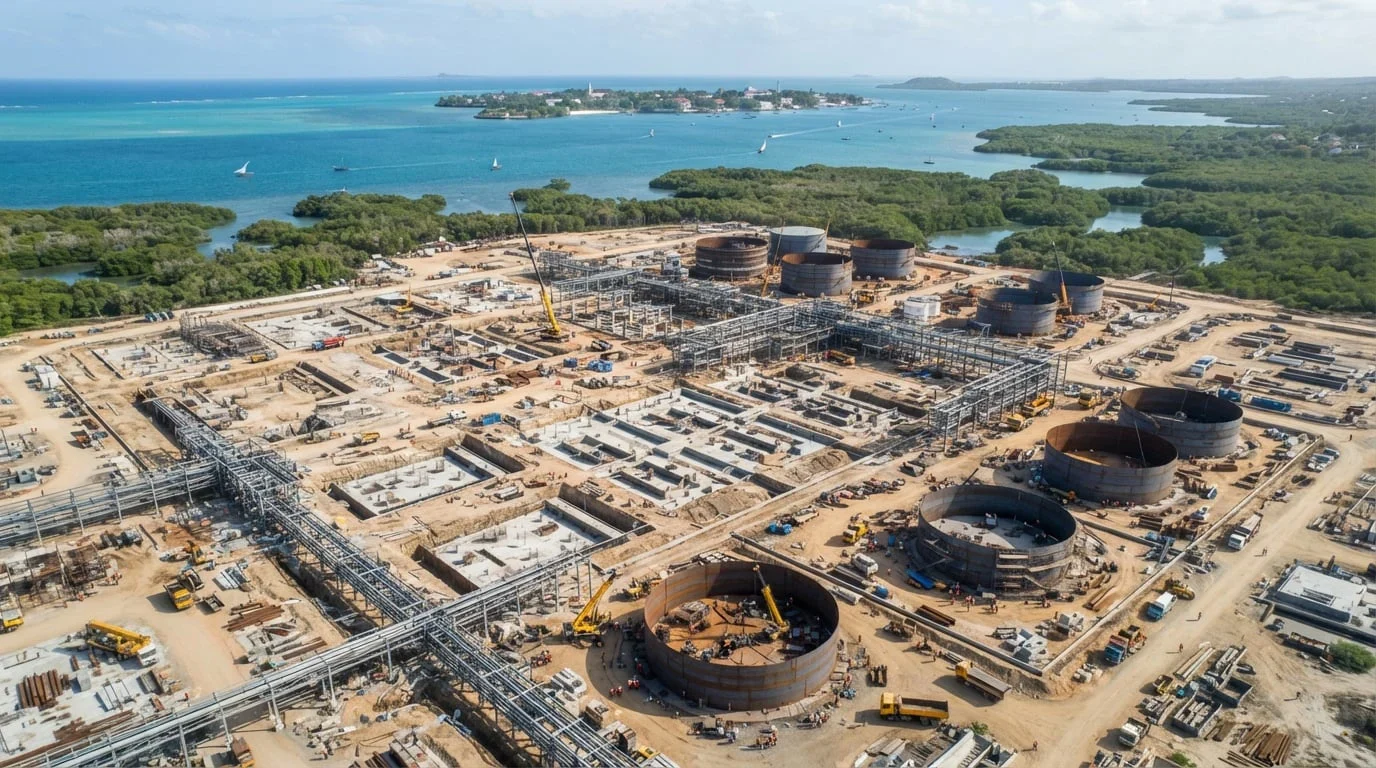
When news broke that Aliko Dangote is planning to build an oil refinery in Lamu, most people immediately thought about jobs, fuel and what it could mean for Kenya’s energy sector.
Fair enough. But there is another conversation worth having.
What happens to a town’s property market when an investment of this size comes knocking?
Real estate has a funny way of following opportunity. We’ve seen it happen around new roads, bypasses and even airports. Once businesses move in and people begin relocating for work, demand for property isn’t usually far behind.
So, if the refinery becomes a reality, could Lamu be next?
READ ALSO: The Infrastructure Projects Quietly Reshaping Nairobi’s Property Market
Table of Contents
Lamu has been waiting for an investment like this
This isn’t the first time Lamu has been tipped as Kenya’s next growth frontier.
The county sits at the heart of the LAPSSET Corridor, one of the country’s biggest infrastructure projects. It is also home to the Lamu Special Economic Zone (SEZ), which was created to attract industries by making it easier and more attractive to invest.
Think of an SEZ as a place designed for business. Companies setting up there can benefit from incentives such as tax reliefs, simpler processes and better infrastructure. The idea is to encourage investment, create jobs and grow the local economy.
An oil refinery would fit right into that vision.
But here’s the interesting part.
A refinery doesn’t just bring one company. It creates an entire ecosystem.
It’s never just about the refinery
Imagine a project of this size getting underway.
You’ll need contractors to build it. Transport companies to move materials. Suppliers. Engineers. Banks. Security firms. Restaurants. Hotels. Maintenance companies. Retail shops.
And every one of those businesses will need people.
Some of those people will rent. Others will buy. Some will stay for a few months while others may settle for years.
Before you know it, the conversation shifts from “Who’s building the refinery?” to “Where is everyone going to live?”
That’s usually where real estate starts to move.
The opportunity for developers might be bigger than people think
Whenever a major project is announced, the first question is usually, “Should I buy land there?”
Maybe.
But that might not be the biggest opportunity.
The bigger opportunity could be building the housing that a growing workforce will need.
Not everyone moving to Lamu will be looking for a luxury beachfront home. Many will simply want decent, affordable housing close to where they work.
That creates room for developers to think differently.
Instead of waiting until demand outpaces supply, this is the time to start thinking about well-planned residential communities, rental apartments and mixed-use developments that can serve a growing population.
If planned well, these developments don’t just meet housing demand. They also create neighbourhoods where people can live, shop and access essential services without travelling long distances.
Could the SEZ help make housing more affordable?
This is where the Special Economic Zone becomes even more interesting.
One of the goals of an SEZ is to make investment easier. Alongside tax incentives, governments often invest in supporting infrastructure like roads, electricity and water to attract businesses.
That matters for real estate too.
When infrastructure is already in place, developers spend less, bringing basic services to a project. Lower development costs can make it easier to build quality housing at prices that are more affordable for the people who will actually be working in the area.
It’s a model we’ve seen in other parts of the world.
Industrial hubs in countries like Saudi Arabia, China and the UAE didn’t just build factories. They planned housing alongside them so that workers could live close to where they worked.
Lamu has an opportunity to do the same.
It’s not just housing that could benefit
As the population grows, demand doesn’t stop at homes.
More people means more supermarkets, restaurants, schools, clinics, banks, petrol stations and entertainment spaces.
Businesses will need offices, warehouses and retail space. Visitors and contractors may need hotels and serviced apartments.
For commercial property developers and investors, that could open up opportunities that don’t exist today.
What does this mean for investors?
If you’re thinking about investing in Lamu, it helps to look beyond the headlines.
Yes, land values could rise if investment gathers pace.
But history has shown that the biggest winners are often those who understand what people will actually need.
Sometimes that’s rental apartments. Sometimes it’s commercial space.
Sometimes it’s mixed-use developments that bring homes, shops and offices together.
The key is following long-term demand instead of short-term hype.
And what about the people who already call Lamu home?
For residents, the impact could go beyond property prices.
More investment could mean more jobs, better roads and improved infrastructure.
It could also mean more housing choices if developers respond early enough to meet demand.
Of course, growth also comes with challenges.
Without proper planning, rising demand can push up rents and make housing less affordable for local families.
That’s why housing should be part of the conversation from the very beginning, not something that is addressed after the workers have already arrived.
Conclusion
The refinery is still a proposal, and there is still plenty that needs to happen before construction begins.
But if it moves forward, the impact is likely to be felt far beyond the energy sector.
For developers, it could be an opportunity to build the homes and commercial spaces that a growing workforce will need.
For investors, it could be a chance to look beyond land speculation and think about long-term demand.
And for Lamu residents, it could mean more jobs, better infrastructure and a property market that grows alongside economic opportunity.
Sometimes, the biggest real estate stories don’t begin with property.
They begin with investment.
And this could be one worth watching.
READ ALSO: How Urbanisation is Redefining Housing in Kenya