- For a long time, Nairobi’s property market followed a fairly predictable pattern.
- Today, some of the biggest conversations in real estate are happening outside Nairobi itself.
- Instead of development remaining concentrated within a few city neighbourhoods, growth is spreading into surrounding towns connected by infrastructure and accessibility.
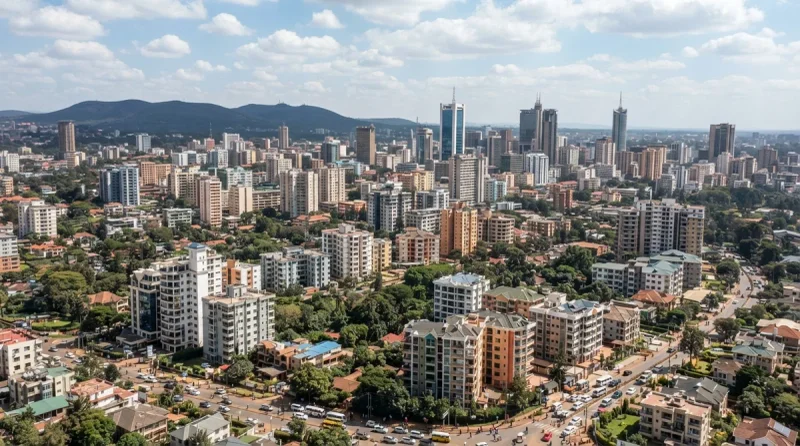
For a long time, Nairobi’s property market followed a fairly predictable pattern. Areas close to the CBD, Westlands or Kilimani attracted most of the attention, while places further outside the city were mostly viewed as “too far” or underdeveloped.
That has changed significantly over the last few years.
Today, some of the biggest conversations in real estate are happening outside Nairobi itself. Satellite towns are growing faster, developers are expanding into new areas and more homebuyers are willing to live further away from the city centre than they were a few years ago.
A big reason for that shift is infrastructure.
Roads, rail systems and transport projects are quietly changing how people move, where they want to live and which areas are becoming more attractive for investment.
READ ALSO: How to Spot Emerging Real Estate Hotspots in Kenya Before Everyone Else
Table of Contents
Infrastructure Is Now Driving Property Growth
In real estate, infrastructure almost always changes everything.
When roads improve, commuting becomes easier. When transport systems expand, areas that once felt inaccessible suddenly become practical places to live. Over time, businesses, developers and homebuyers naturally follow.
That’s exactly what Nairobi is experiencing right now.
The city is no longer growing inward alone. It’s spreading outward into surrounding towns connected by major infrastructure projects.
The Commuter Rail Expansion Could Change Daily Living
One of the projects likely to have a huge impact over the next few years is the expansion of Nairobi’s commuter rail system.
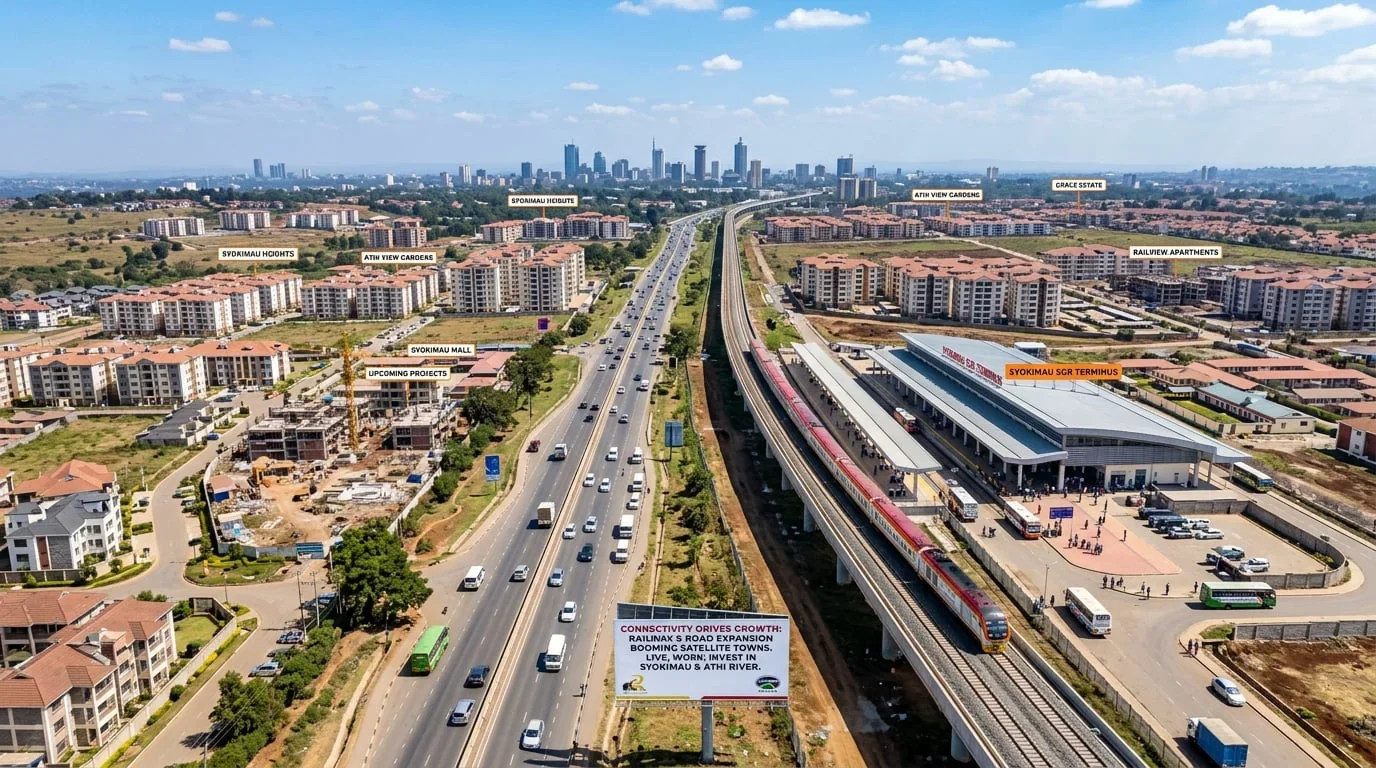
The government has already announced plans to improve rail connectivity between Nairobi and surrounding satellite towns such as Ruiru, Syokimau, Embakasi and Kikuyu. There are also plans to modernise the Nairobi-Thika commuter rail corridor to improve mobility within the Nairobi Metropolitan Area.
While commuter rail may not sound exciting at first, transport access plays a huge role in property growth.
The easier it becomes for people to move into and out of Nairobi, the more attractive surrounding areas become for both homeowners and developers.
Places like Ruiru and Syokimau are already seeing strong residential demand, but improved commuter transport could push that growth even further over the next few years.
Nairobi Railway City Could Bring New Life to the CBD
For years, many businesses and residents have gradually shifted away from Nairobi’s CBD. Congestion, aging buildings and changing work trends have made other locations more attractive.
However, the Nairobi Railway City project could slowly begin changing that.
The project aims to transform the current railway area into a modern transport hub integrated with offices, retail spaces and public infrastructure. If completed successfully, it could significantly improve movement within the city while also attracting renewed development around the CBD.
And while many people associate growth with satellite towns today, projects like Railway City show that some parts of Nairobi itself could also experience a revival.
JKIA Expansion Could Push Growth Further East
Another project quietly influencing real estate is the planned expansion of Jomo Kenyatta International Airport.
As passenger numbers continue growing, the airport is expected to undergo major upgrades aimed at improving capacity and supporting future growth.
Large airport expansions usually have a ripple effect on surrounding areas.
Places such as:
- Athi River,
- Syokimau,
- Embakasi,
- and parts of eastern Nairobi
could continue attracting more demand because of increasing activity linked to logistics, warehousing, hospitality and housing.
Over time, infrastructure tied to airports often creates entirely new economic zones around them.
So Where Should Investors and Homebuyers Be Looking?
The reality is that Nairobi’s future growth may no longer be centred around traditional prime areas alone.
Increasingly, the areas likely to attract long-term growth are those benefiting from:
- improved transport,
- accessibility,
- industrial expansion,
- and population movement.
Places like Ruiru, Syokimau, Athi River, Kikuyu and even parts of Ngong continue attracting attention because they offer something many people are looking for today — more space, relatively affordable housing and improving connectivity to Nairobi.
That said, growth alone does not automatically make every area a good investment. Factors such as flooding, poor planning, oversupply and weak infrastructure still matter and can affect long-term value.
Nairobi’s Growth Is Becoming More Decentralised
One of the biggest shifts happening today is that Nairobi is slowly becoming more decentralised.
Instead of development remaining concentrated within a few city neighbourhoods, growth is spreading into surrounding towns connected by infrastructure and accessibility.
And as more transport and infrastructure projects continue taking shape, the areas benefiting today could look very different five years from now.
READ ALSO: Small Towns, Big Wins: How Quiet Corners Became Investment Goldmines