- And as populations grow, it becomes essential to expand and upgrade supporting infrastructure and amenities to match that demand.
- The situation in Nairobi and its surrounding areas is not just about overcapacity.
- Maintenance has to become part of the conversation too. Because even the best systems will fail if they’re not taken care of.
- Are we planning for the future or simply reacting to the present? Are we building fast or building right?
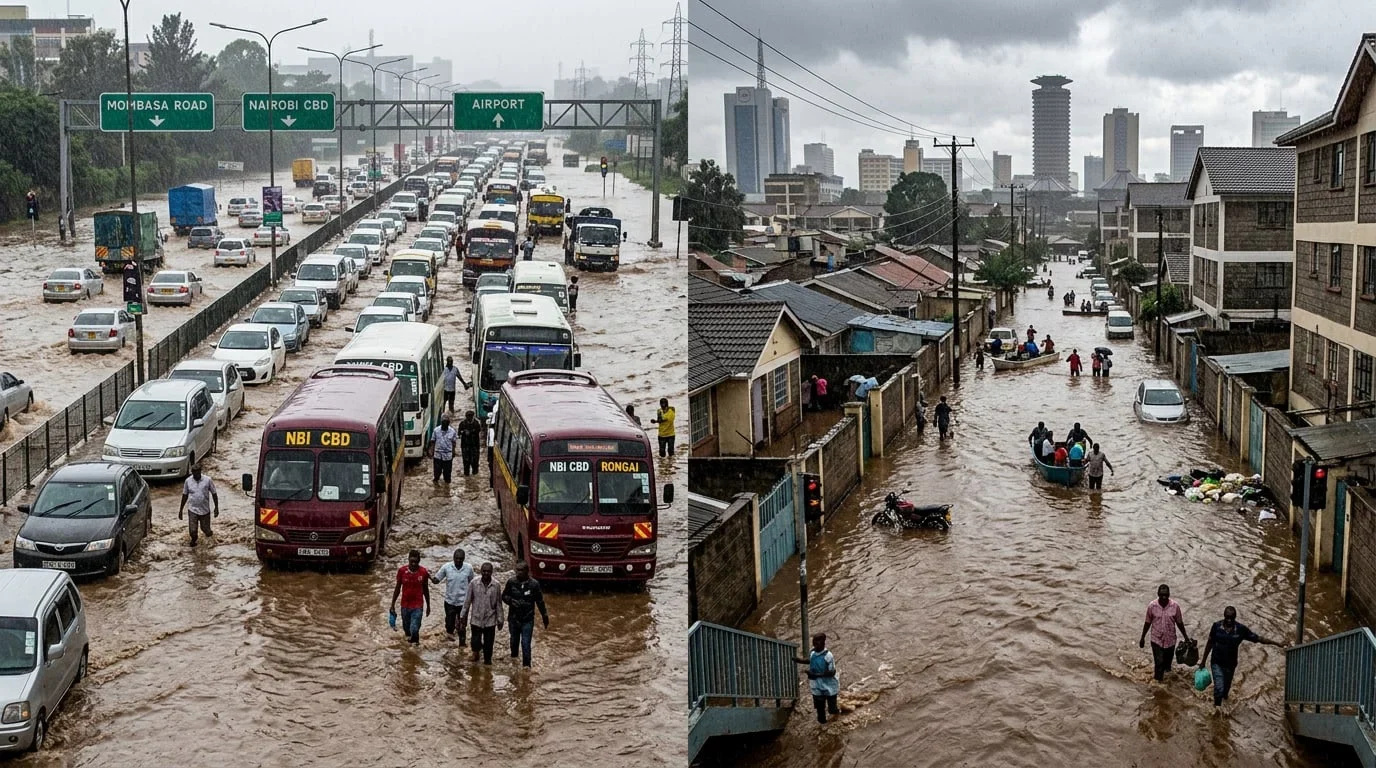
It’s the rainy season, and like every year, there’s a period of heavy rainfall. This year, however, feels different. The downpour has been unlike anything previously experienced in Nairobi and its surrounding areas. From major highways being completely submerged to entire estates filling up with water, and homes suffering damage as rainwater enters and destroys property, the impact has been widespread.
Compared to last year, the water almost seems more aggressive. Areas that didn’t previously experience flooding are now affected. And this has left many residents asking the same question: are the rains heavier than before, or is our drainage system simply failing us?
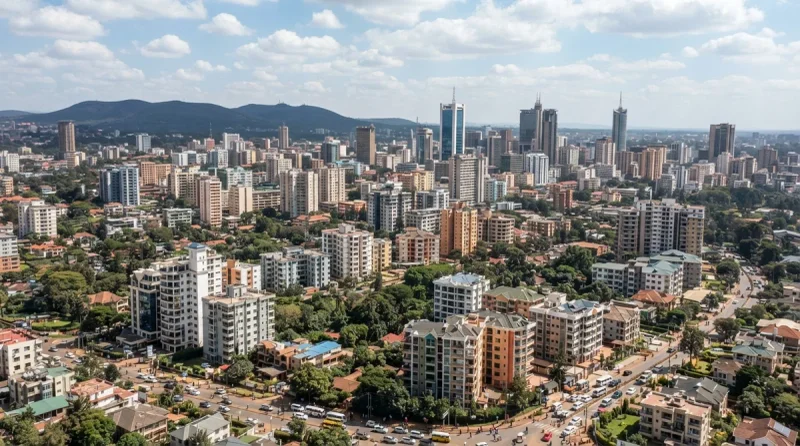
The truth is, there has been a significant increase in development across many of these areas. Places that were once sparsely populated are now home to standalone houses, gated communities, mixed-use developments, and apartment complexes. Population density has increased far beyond what the original infrastructure was designed to support.
And as populations grow, it becomes essential to expand and upgrade supporting infrastructure and amenities to match that demand. When that doesn’t happen, the consequences are almost inevitable. Over time, residents begin to experience unreliable water and power supply, sewage system failures, strained road networks, and when it rains heavily, flooding becomes part of the pattern.
So the situation in Nairobi and its surrounding areas is not just about overcapacity. It’s about planning, enforcement of building codes, infrastructure investment, and long-term urban design. Was this avoidable in the first place? And more importantly, is there a way to fix it?
Let’s get into the nitty gritty.
READ ALSO: Navigating the Impact of Kenyan Floods on the Real Estate Landscape
Table of Contents
Where Did Things Start Going Wrong?
So where exactly did things start going wrong?
Part of it comes down to how these areas were planned, or in some cases, how they weren’t. Nairobi has grown fast. Faster than most systems around it could keep up with. And while growth in itself isn’t a bad thing, the problem starts when that growth isn’t properly guided.
Over time, we’ve seen developments come up in places that were never really meant to handle that kind of density. Natural drainage paths have been built over. Riparian land has been encroached on. Spaces that were once open and allowed water to flow or be absorbed into the ground are now covered in concrete and tarmac.
And water, as we’re now seeing, always finds a way.
When Development Ignores Nature
What used to be a manageable flow during heavy rains now has nowhere to go. Instead of being absorbed, it runs off surfaces faster, collects in low-lying areas, and overwhelms whatever drainage systems exist.
It’s not just about the amount of rain anymore, it’s about what we’ve done to the land it’s falling on.
The Drainage Problem
Which brings us to the second part of the problem: the drainage systems themselves.
In many of these areas, the drainage infrastructure simply wasn’t designed for the kind of population and development we’re seeing today. Some systems are outdated. Others are undersized. And in many cases, they’re poorly maintained; blocked by debris, waste, or even construction.
So when heavy rains hit, it’s not just about how much water is falling. It’s about how quickly the system gets overwhelmed.
And right now, it doesn’t take much.
When the System Fails
You end up with roads turning into rivers, estates becoming temporary catchment areas, and homes sitting directly in the path of water that has nowhere else to go. It’s not just inconvenient, it’s disruptive, costly, and in some cases, dangerous.
The frustrating part is that none of this is entirely new. These are patterns that have been building over time. But they become impossible to ignore when the rains come this hard.
And it raises an uncomfortable question: if we can clearly see where the system is failing, why does it keep happening?
Who Is Responsible?
At this point, it’s easy to point fingers. And to be fair, there’s no single place to direct all the blame.
Developers play a role. In the rush to meet demand, some projects go up with little regard for the long-term impact on the surrounding environment or infrastructure. What matters most is getting the project up and sold.
But it doesn’t stop there.
Planning authorities and regulators also carry responsibility. Building codes and zoning laws exist for a reason, but when enforcement is weak or inconsistent, gaps start to form. And over time, those gaps become the very problems we’re now dealing with.
Then there’s maintenance, or the lack of it. Drainage systems don’t just fail overnight. They get blocked, neglected, and forgotten until the pressure becomes too much.
So the issue isn’t just one of poor decisions. It’s a combination of oversight, inaction, and, in some cases, looking the other way.
And the result is what we’re seeing now: a system that struggles to cope the moment it’s tested.
Can This Be Fixed?
The short answer? Yes. But not overnight.
Fixing this isn’t just about reacting every time the rains come. It’s about stepping back and rethinking how we plan, build, and maintain our urban spaces.
It starts with stricter enforcement of planning regulations. Not just on paper, but in practice. Developments need to align with what the infrastructure can actually support,or plans need to be upgraded before construction even begins.
There’s also a need to invest in better, more modern drainage systems. Systems that reflect the current reality, not what these areas looked like ten or twenty years ago.
And just as importantly, we need to protect the spaces that naturally help manage water, riparian land, open ground, and drainage paths. Once those are gone, the problem becomes much harder and more expensive to solve.
Maintenance has to become part of the conversation too. Because even the best systems will fail if they’re not taken care of.
But beyond all that, there’s a bigger shift that needs to happen. One where growth is not just about putting up more buildings, but about creating environments that can actually sustain the people living in them.
The Bigger Question
Because in the end, this isn’t just about flooding. It’s about how we’re choosing to build our cities.
Are we planning for the future or simply reacting to the present? Are we building fast or building right?
Because if the current pattern continues, the rains will keep exposing the same cracks. Just in different places, and at a much higher cost.
And maybe that’s the real issue. Not that the rains are getting heavier, but that the system was never ready for them in the first place.
READ ALSO: Climate Change and Its Impact on Kenyan Real Estate: Insights from the Africa Climate Summit