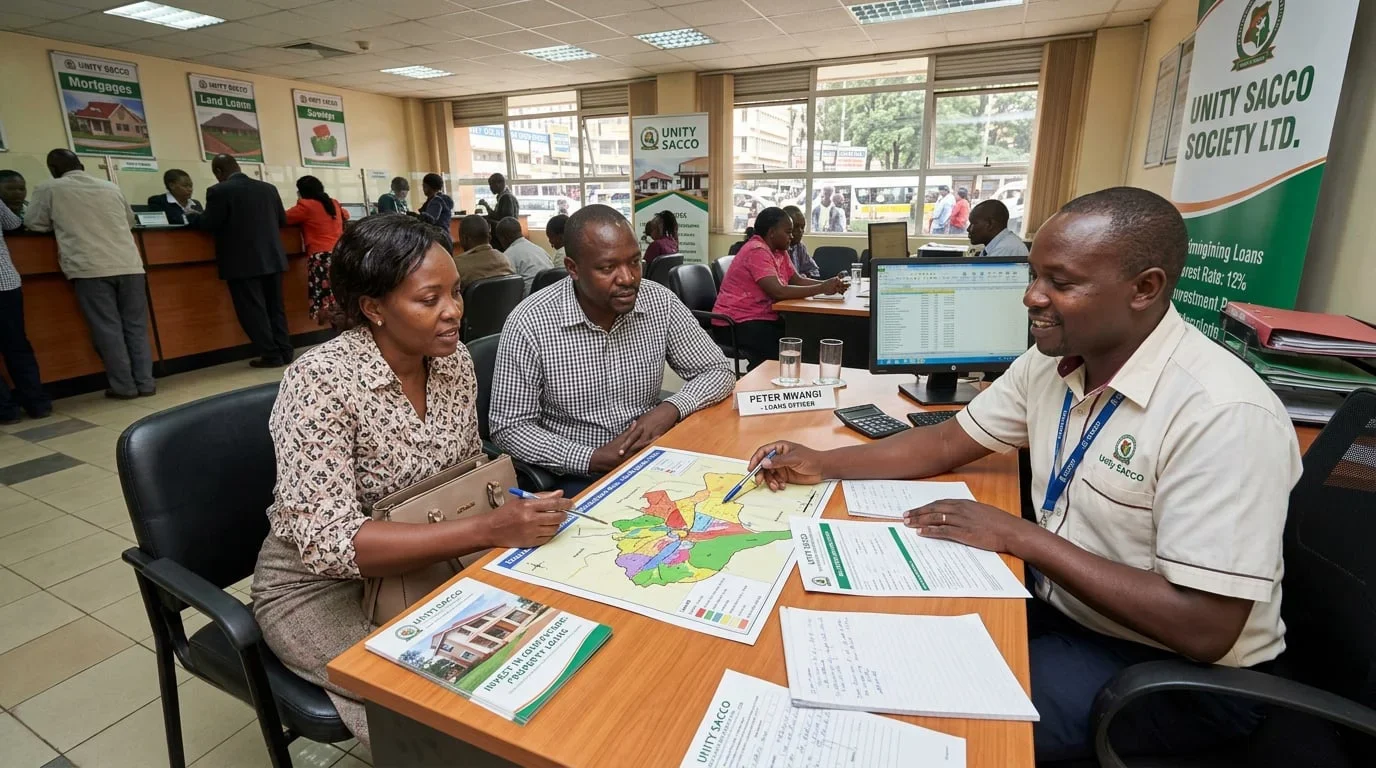
- SACCOs have quietly evolved from simple savings groups into major financial institutions.
- Land and housing loans have become some of the biggest categories within SACCO financing.
- Kenya’s housing demand continues to grow, yet mortgage penetration remains extremely low.
- As Kenya’s urban population continues to grow and demand for housing rises, SACCOs are likely to play an even bigger role in shaping the future of real estate financing.
For many years, mortgages were considered the standard path to home ownership. You save up, walk into a bank, qualify for a mortgage and eventually buy a home. In reality, however, that process has remained out of reach for many Kenyans. High interest rates, strict qualification requirements and large deposits have made traditional mortgages inaccessible to a large percentage of the population.
As a result, many people have turned elsewhere, and increasingly, that “elsewhere” has become SACCOs.
Today, SACCOs are becoming one of the biggest drivers of real estate financing in Kenya. From land purchases to home construction and property investment, more Kenyans are relying on SACCO loans to access property in ways traditional mortgages have failed to support.
READ ALSO: Mortgage Application Process in Kenya: Step-by-Step Guide
Table of Contents
Why Are Mortgages Still Inaccessible in Kenya?
Kenya’s housing demand continues to grow, yet mortgage penetration remains extremely low. For many middle-income earners, qualifying for a bank mortgage is still difficult.
Banks often require:
- formal employment,
- strong credit histories,
- proof of stable income,
- and substantial deposits.
For someone trying to buy land or slowly build a home over time, the process can feel unrealistic.
This is where SACCOs have stepped in.
Unlike commercial banks, SACCOs tend to base lending on member savings, contribution history and guarantors. This makes financing more accessible to teachers, police officers, nurses, small business owners and many salaried Kenyans who may struggle to meet traditional banking requirements.
SACCOs Have Quietly Become Financial Giants
For a long time, SACCOs were viewed mainly as savings groups. That perception has changed significantly over the years.
According to the Sacco Societies Regulatory Authority (SASRA), SACCO assets in Kenya reached KSh 1.21 trillion by the end of 2025. Deposits stood at KSh 831.91 billion, while the SACCO loan book grew to KSh 948.31 billion.
These are no longer small community organisations operating on the sidelines of the economy. SACCOs have become major financial players with enormous lending power.
What is even more interesting is how much of that financing is now flowing into real estate.
In 2025 alone, SACCOs disbursed more than KSh 125 billion in land and housing-related loans. During the third quarter of the year, land purchase loans stood at KSh 17.37 billion while housing loans reached KSh 15.33 billion.
Those numbers clearly show that SACCOs are becoming one of the key channels through which Kenyans are financing property ownership.
How Do SACCOs Help Kenyans Buy Property?
One of the biggest reasons SACCOs are growing in real estate financing is flexibility.
In many developed markets, buyers often purchase complete homes through mortgages. In Kenya, however, property ownership tends to happen gradually. Someone may buy land first, begin construction later and complete the house in phases depending on available finances.
SACCO financing supports this model much better than traditional mortgages.
Members can take smaller loans over time for:
- land purchases,
- construction,
- home finishing,
- or renovations.
This approach aligns more closely with how many Kenyans actually build wealth and acquire property.
Trust also plays a major role.
Many SACCOs are community-based and built around shared membership through professions, companies or social groups. Because of this, members often feel more comfortable borrowing from institutions they already save with and participate in regularly.
To many people, SACCOs feel more personal and approachable compared to commercial banks.
Major SACCOs such as Mwalimu National SACCO and Stima SACCO have already expanded their housing and land financing products, further strengthening the relationship between SACCOs and Kenya’s property market.
Are SACCOs Replacing Mortgages in Kenya?
Not entirely. Banks still play a major role in property financing, especially for large-scale developers and high-value mortgages.
However, SACCOs are increasingly filling a gap that traditional mortgages have struggled to address.
They are financing people the conventional mortgage market often leaves out.
For many Kenyans, SACCOs offer a more realistic pathway to property ownership because the financing structure feels achievable and familiar.
The Challenges Facing SACCOs
Despite the growth, SACCOs are not without challenges.
Concerns around governance, delayed member withdrawals, liquidity pressures and financial mismanagement in some SACCOs have raised questions about sustainability and regulation.
As SACCOs continue handling larger amounts of money and bigger property transactions, stronger oversight and transparency will become increasingly important.
There is also growing pressure for SACCOs to modernise their systems, strengthen risk management and maintain member confidence as competition within the financial sector continues to grow.
Key Takeaways
- SACCO assets in Kenya surpassed KSh 1.21 trillion in 2025.
- SACCOs disbursed over KSh 125 billion in land and housing loans.
- Many Kenyans prefer SACCOs because mortgages remain inaccessible.
- SACCOs support phased construction and incremental home ownership.
- SACCOs are becoming major players in Kenya’s real estate financing sector.
As Kenya’s urban population continues to grow and demand for housing rises, SACCOs are likely to play an even bigger role in shaping the future of real estate financing. What was once viewed as a simple savings model is now helping millions of Kenyans access land, finance construction and move closer to owning homes.
READ ALSO: Mortgage or Sacco? Choosing the Right Financing Option in Kenya